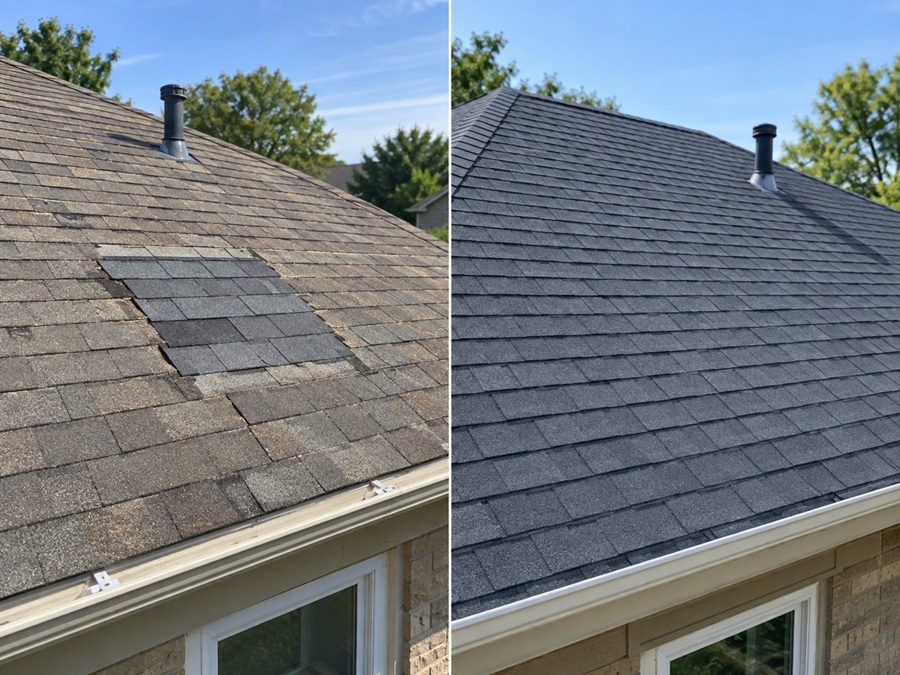
Quick Answer: Repair your roof if the damage is isolated, your roof is under 15 years old, and the affected area covers less than 25% of the total surface. Replace it if the roof is 20+ years old, has widespread damage, or repair costs would run more than 25-30% of a full replacement.
Roof Repair vs Roof Replacement at a Glance
Here’s the fastest way to compare the two options before you read further.
| Factor | Repair | Replacement |
|---|---|---|
| Roof age | Under 15 years | 20+ years |
| Damage spread | Localized (1-2 spots) | Widespread |
| Average cost | $150–$1,500 | $8,000–$25,000+ |
| Leak history | First or second leak | Recurring leaks |
| Best for | Storm damage, missing shingles | End-of-life roofs, structural sagging |
If you’re still not sure which column your roof falls into, keep reading. The next few sections break down exactly what to look for.
Signs You Only Need a Repair
A repair makes sense when the damage is contained and the rest of the roof is still doing its job. You’re not trying to save a dying roof, you’re just fixing a specific problem on a roof that still has years left in it.
Isolated Leaks
One leak in one spot, especially after a storm, usually points to a repair, not a full teardown.
- A single water stain on the ceiling in one room
- Leak traced to one damaged flashing point or a cracked vent boot
- No signs of leaking anywhere else in the attic or ceiling
If a storm just came through and you’re dealing with sudden leaks, it’s worth getting a professional to assess the damage before you assume the worst. A good roofing contractor after a storm can tell you within an hour whether you’re looking at a quick patch job or something bigger.
A Few Missing or Damaged Shingles
Wind can rip off a handful of shingles without compromising the whole roof.
- Fewer than 10-15 shingles missing or cracked
- Surrounding shingles are still flat, sealed, and not curling
- No granule buildup in your gutters beyond what’s normal
Roof Under 15 Years Old
Age matters more than most homeowners realize. A roof that’s still under 15 years old, made with standard asphalt shingles, generally has enough life left that a repair is the financially smarter move.
Signs You Need a Full Replacement
Replacement becomes the right call when the roof itself is failing, not just one part of it. Patching a roof that’s structurally done just delays a bigger, more expensive problem.
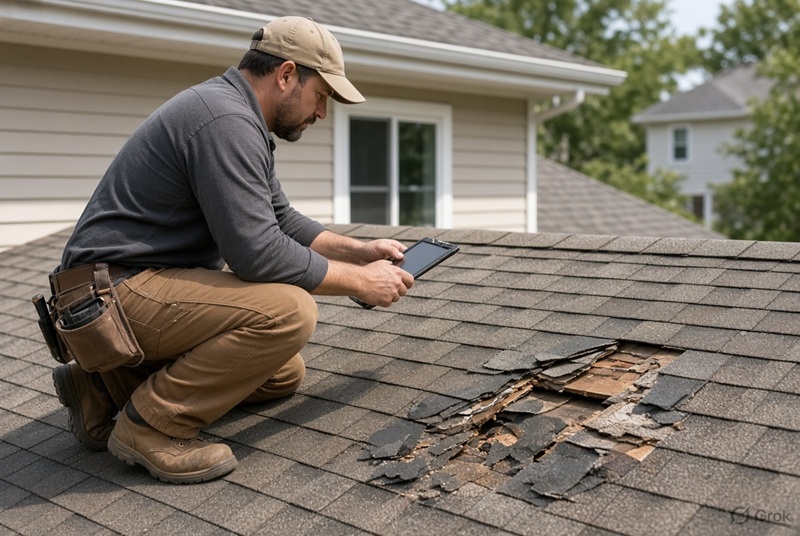
Roof Age (20+ Years)
Most asphalt shingle roofs are built to last 20-25 years. Once you’re past that mark, even minor damage is often a symptom of the whole roof wearing out, not an isolated issue.
Widespread Damage or Multiple Leak Points
- Leaks showing up in more than one room or area
- Damage spread across multiple sections of the roof, not just one
- Repeated repairs in the last 2-3 years that keep reappearing
Sagging Roof Deck
This is the one sign that should skip the repair conversation entirely. A visibly sagging roofline usually means the wood decking underneath has weakened, sometimes from long-term water damage, and that’s a structural issue, not a surface one.
Granule Loss Across Large Areas
Shingles losing their granules in patches here and there is normal aging. But when you see bald spots across most of the roof, or your gutters are consistently full of granules, the shingles have lost their protective layer and are close to the end of their usable life.
The 25% Rule Roofers Use
Most homeowners have never heard of this, but it’s one of the most practical decision tools in the industry: if damage covers more than 25% of your roof’s total surface, replacement is usually more cost-effective than repair.
Here’s why this number matters so much:
- Matching old shingles to new ones gets harder and more expensive as the damaged area grows
- Labor costs for scattered repairs often end up close to labor costs for a full tear-off
- Insurance adjusters frequently use this same threshold when deciding between a repair payout and a replacement payout
- Repairing past this point often means paying twice, once now, and again in a few years when the rest of the aging roof starts failing too
If a contractor estimates your damage at 20-30% of the roof, ask them directly how they’re calculating that number. It’s a fair question, and a reputable contractor will walk you through it without hesitation.
Cost Comparison: Repair vs Replacement
Costs vary a lot by roof size, material, and region, but here’s a general range to work with.
| Roof Size | Repair Cost | Replacement Cost (Asphalt Shingle) |
|---|---|---|
| Small (under 1,500 sq ft) | $150–$600 | $8,000–$12,000 |
| Medium (1,500–2,500 sq ft) | $300–$1,000 | $12,000–$18,000 |
| Large (2,500+ sq ft) | $500–$1,500+ | $18,000–$25,000+ |
A repair looks cheaper on paper almost every time. But if your roof is already old or the damage keeps recurring, that lower number can be misleading.
A quick way to think about it: a $12,000 replacement that lasts 25 years costs roughly $480 a year. Three separate $2,000 repairs spread across 8 years on a roof that’s already failing works out to about $750 a year, and you still end up needing a replacement afterward. Sometimes the “cheaper” option upfront isn’t actually cheaper over time.
Does Insurance Cover It?
Homeowners insurance often covers roof damage, but coverage depends heavily on the cause of the damage and the condition of the roof beforehand.
- Storm or wind damage: Usually covered, especially if it’s sudden and accidental
- Age-related wear: Almost never covered, insurers treat this as normal maintenance, not damage
- Pre-existing neglect: If an adjuster finds the roof was already deteriorating before the storm, they may deny or reduce the claim
Getting a professional inspection before filing a claim can make a real difference here. An inspector can document the exact cause and extent of damage, which strengthens your case with the insurance company either way, repair or replacement.
How Long Will a Repair Actually Last?
This depends entirely on why the roof needed a repair in the first place.
- Storm damage repair on a young roof: Can easily last the rest of the roof’s expected lifespan
- Repair on a roof already past 15-18 years: Often buys you 2-5 years before more issues show up
- Repeated patch jobs on an aging roof: Diminishing returns, each repair tends to last less time than the one before it
If you’re being told the same section needs repair for the second or third time, that’s usually a sign the roof is telling you something bigger is going on.
Decision Checklist: Repair or Replace?
Run through this quickly before making a call:
- Is the roof under 15 years old? → Leans toward repair
- Is the damage under 25% of the total roof? → Leans toward repair
- Is this the first or second repair in the last 2 years? → Leans toward repair
- Is the roof over 20 years old? → Leans toward replacement
- Is there sagging, structural damage, or repeated leaks in multiple spots? → Leans toward replacement
- Would repair costs exceed 25-30% of a full replacement? → Leans toward replacement
If your checklist answers are split, that’s usually a sign it’s worth getting a second opinion before committing either way. Since roofing decisions involve real money and long-term risk, it’s worth taking the time to find a reputable roofing contractor in your area rather than going with the first quote you get.
Frequently Asked Questions
How do I know if my roof needs repair or replacement?
Check the roof’s age, how much of it is damaged, and whether leaks are isolated or recurring. A roof under 15 years old with damage under 25% of the surface usually needs repair. A roof over 20 years old with widespread issues usually needs replacement.
Is it cheaper to repair or replace a roof?
Repair is almost always cheaper upfront, often $150-$1,500 versus $8,000+ for replacement. But on an aging roof, repeated repairs can cost more over time than one replacement, since each patch tends to last less than the one before it.
How many roof leaks before replacement?
There’s no fixed number, but two or more recurring leaks in different areas within a short span, especially on a roof over 15 years old, is usually a strong signal that replacement will save more money than continued repairs.
Does homeowners insurance cover roof replacement?
Often yes, if the damage is from a sudden event like a storm. Coverage is usually denied for age-related wear or neglect, since insurers treat that as routine maintenance rather than an insurable event.
Conclusion
The repair vs replacement decision usually comes down to three numbers: your roof’s age, how much of it is actually damaged, and how that repair cost compares to a full replacement. Get those three answers from a professional inspection, and the decision tends to make itself.
If you’re also considering upgrades while you’re at it, it’s worth looking into whether a solar roofing option makes sense for your home, since a replacement is often the most cost-effective time to make that switch. For more roofing guides and resources, visit RoofingCop.
4 thought on “Roof Repair vs Roof Replacement: How to Know Which You Need”