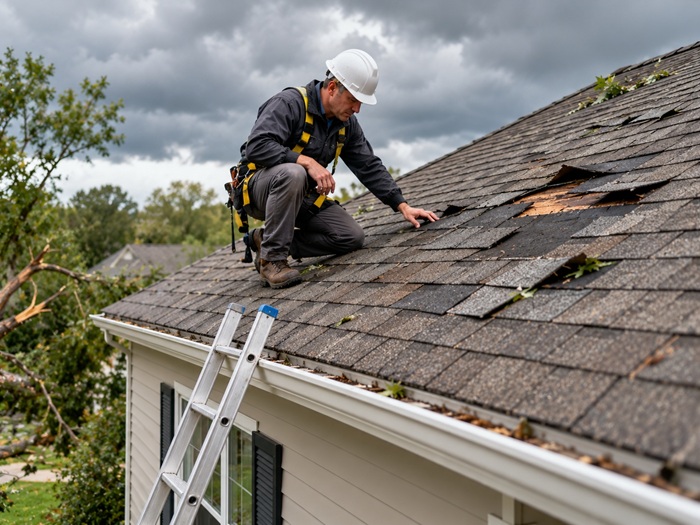
A storm just tore through your neighborhood, and now there’s a truck in your driveway before you’ve even finished checking your gutters. To choose the right roofing contractor after a storm, verify their license and local address first, get a written inspection and estimate before signing anything, and never let anyone rush you into a same-day contract. Everything else in this guide builds on those three rules.
Storm season brings out the best roofers and the worst opportunists, often within the same 48 hours. Knowing the difference protects your home, your insurance payout, and your wallet. It’s the same reason we built Roofing Cop in the first place, to give homeowners a straight answer before a stranger in a truck gives them a sales pitch.
Quick Answer:
To choose a roofing contractor after a storm, Frist verify their license number with your state board and confirm they have a real local address, and get three written estimates before signing anything. Avoid anyone who pressures you to sign the same day or offers to waive your insurance deductible, both are classic storm chaser tactics.
Key Takeaways
| Do This | Skip This |
|---|---|
| Document damage yourself before calling anyone | Letting a door-to-door crew do the first inspection |
| Verify the license number with your state board | Taking “licensed and insured” as their word |
| Get 3 written, itemized estimates | Signing the first contract handed to you |
| Confirm your insurance claim window first | Assuming you have unlimited time to decide |
| Read the full contract, including any AOB clause | Skipping the fine print to speed things up |
Why Choosing the Wrong Contractor After a Storm Is So Risky
Pick the wrong contractor after a storm and you risk more than a bad repair job. You could lose your insurance claim, end up with a lien on your house, or pay for work that was never actually needed.
Storm damage creates a strange kind of urgency. Your roof is leaking, your neighbors are getting quotes, and someone in a branded polo shirt is already knocking on your door. That pressure is exactly what bad actors count on.
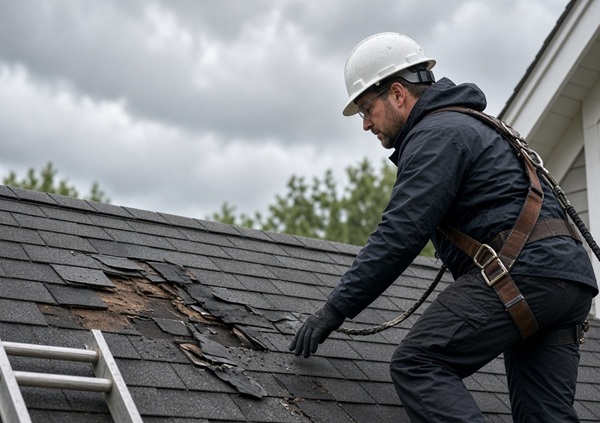
The “Storm Chaser” Problem, Explained
A storm chaser is a roofing crew that travels from disaster to disaster, often from out of state, showing up right after severe weather to sign homeowners to contracts before local, licensed companies can even get to the neighborhood.
Here’s how it usually plays out. A hailstorm hits a town. Within days, unmarked trucks and out-of-state license plates show up. Crews go door to door offering “free inspections,” find damage (real or exaggerated), and push homeowners to sign a contract on the spot. By the time the repair falls apart six months later, the crew is three states away and impossible to reach.
Not every out-of-town crew is a scam. Some are legitimate regional companies that specialize in storm response. The difference comes down to what they can prove, not what they promise. We’ll cover exactly how to check that in Step 4.
What’s Actually at Stake
A bad contractor decision after a storm can cost you in ways that go beyond a leaky patch job:
- Denied insurance claims if the contractor pressures you to inflate damage or misrepresent the cause
- Mechanic’s liens on your property if a contractor doesn’t pay their suppliers or subcontractors, even after you paid in full
- Voided manufacturer warranties from improper installation
- Lost deposits when a storm chaser disappears before the job starts
- Assignment of Benefits (AOB) complications where you sign away control of your own insurance claim (more on this below, since almost nobody covers it clearly)
Expert Tip: The fastest way to spot a storm chaser is to ask for their license number before you ask about price. A legitimate roofer will rattle it off without blinking, because they use it every day. Someone stalling, changing the subject, or handing you a business card instead of a real number is telling you everything you need to know, before you’ve even asked about the roof.
Step 1: Document the Damage Before You Call Anyone
Before you contact a single contractor, get your own record of the damage. This protects you if a contractor later tries to claim damage that wasn’t there, and it gives your insurance company an unbiased starting point.
Safe Ways to Inspect From the Ground
Never climb onto a storm damaged roof yourself. Wet, damaged shingles and unstable decking cause serious falls every year. Instead, check for visible signs from ground level:
- Missing, torn, or curled shingles in the yard or gutters
- Dented gutters, vents, or metal flashing (a sign of hail impact)
- Granules from asphalt shingles collecting in downspouts
- Visible sagging or dents in the roofline
- Water stains spreading across your ceiling or ceiling corners
- Debris, branches, or shingle pieces scattered across the lawn
Photo and Video Documentation Checklist
Walk your property with your phone and capture:
- Wide shots of each side of the roof from the ground
- Close-ups of any visible damage (zoom in, don’t climb)
- Interior water stains, with a date stamp visible if possible
- Any debris on the ground that came from your roof
- A short video walking the perimeter of the house
Save everything in one folder. You will need this for both your insurance claim and to compare against what a contractor later reports.
When to Call a Professional Inspector Immediately
Call a licensed roofer or your insurance company right away if you see active leaking, exposed decking, or any sign the roof structure itself is compromised. Active water intrusion causes mold and structural damage fast, and waiting even a few days can turn a covered repair into a bigger, sometimes uncovered, problem.
Step 2: Understand Your Insurance Timeline First
Most homeowners insurance policies require you to report storm damage within a specific window, often 30 to 60 days, though some states and policies allow up to a year. Call your insurer or check your policy documents before you agree to any repair timeline a contractor proposes.
Typical Claim Filing Windows
| Policy Type | Common Reporting Window | Where to Confirm |
|---|---|---|
| Standard homeowners policy | 30 to 60 days from date of loss | Your declarations page or agent |
| State mandated minimum | Varies by state, some set 1 year | Your state insurance department |
| Named storm/hurricane policies | Often shorter, sometimes 1 year with exceptions | Policy endorsement section |
These numbers vary by insurer and state, so treat this table as a starting point for your own conversation with your agent, not a substitute for it.
Contractor vs. Public Adjuster: What’s the Difference?
A roofing contractor repairs your roof. A public adjuster works for you, not the insurance company, to negotiate the size of your claim payout. They are not the same role, and a contractor who tells you not to bother with an adjuster (or insists you only need them) is skipping a step that could affect how much of the repair you actually get covered.
One detail worth understanding before you sign anything: some roofing contracts include an Assignment of Benefits (AOB) clause. This signs your right to negotiate and receive the insurance payout directly over to the contractor. It can speed things up, but it also means you lose direct control of your own claim. Read this section of any contract carefully, and ask the contractor to explain it in plain language before you sign.
Step 3: The Red Flags Checklist, How to Spot a Storm Chaser
The clearest sign of a storm chaser is pressure. Legitimate contractors want you to make an informed decision. Storm chasers want a signature before you have time to think.
Door to Door Solicitation Warning Signs
Watch for these patterns when someone shows up unannounced:
- They claim to have “already inspected your roof from the street” and found damage
- They offer to climb up and inspect for free, immediately, without an appointment
- They can’t name a local address or show you a business card with a real office
- Their truck has out-of-state plates and no company signage
- They mention other homes in the neighborhood they’re “already working on” to create social pressure
“Free Inspection” and Deductible Waiver Scams
A free inspection isn’t automatically a red flag, plenty of honest roofers offer them. The scam version comes with a catch: the contractor offers to “cover your deductible” or tells you the repair will cost “exactly what your insurance pays, no more.” In many states, waiving or advertising to waive an insurance deductible is illegal, because it amounts to insurance fraud by inflating the claim to cover the difference.
Pressure Tactics and Same Day Contract Demands
Real roof damage rarely needs a decision within the hour. If a contractor tells you the price is “only good today” or pushes you to sign before you’ve called your insurance company, treat that as a hard stop, not a bargain.
Step 4: What a Legitimate Roofing Contractor Should Have
A trustworthy contractor can prove who they are, not just tell you. Ask for these four things before you consider hiring anyone.
License and Insurance Verification
Don’t just ask “are you licensed and insured.” Ask for the license number and check it yourself.
- Look up your state’s contractor licensing board website and search the license number directly
- Confirm the business name on the license matches the name on the truck, estimate, and contract
- Ask for a certificate of general liability and workers’ compensation insurance, and call the insurer listed to confirm it’s active
- Check that the license status shows “active,” not expired or suspended
This takes ten minutes and eliminates most scams on the spot.
Local Address and Business History
A roofer with a real, physical local address and a history in your area has a reputation to protect. Search the business address on a map to confirm it’s a real office, not a UPS store or vacant lot. Check how long the business has been registered in your state.
Manufacturer Certifications
Certifications from shingle and roofing material manufacturers (like GAF, Owens Corning, or CertainTeed) mean the contractor passed training and installation standards set by the material maker, not just their own opinion of good work. These certifications often come with stronger, manufacturer backed warranties that a random contractor can’t offer.
If your storm damage turns out to be severe enough to need a full replacement rather than a patch job, this is also a good moment to ask what else is possible. Some homeowners use a storm-forced replacement as the right time to look into solar roofing options, since the labor of a full tear-off is already happening either way.
References and Verifiable Reviews
Ask for two or three references from jobs completed in the last year, and actually call them. Cross check online reviews across multiple platforms (Google, BBB, Nextdoor), not just the testimonials on the contractor’s own website.
Step 5: How to Compare Quotes the Right Way
Get at least three written estimates before choosing a contractor. Compare what’s included in each one, not just the bottom line number.
Why the Lowest Bid Is a Red Flag, Not a Win
A bid significantly lower than the others usually means one of three things: cheaper materials, corners being cut on labor and cleanup, or a lowball number designed to get the contract signed, with costs added later. The National Roofing Contractors Association has long advised homeowners to stay skeptical of the lowest bid after a storm and weigh professionalism and workmanship alongside price.
What a Detailed, Trustworthy Estimate Includes
| Estimate Element | Why It Matters |
|---|---|
| Itemized material list and brand | Confirms what you’re actually paying for |
| Labor cost separate from materials | Makes comparing quotes apples to apples |
| Permit costs included | Unpermitted work can cause problems at resale |
| Cleanup and disposal terms | Prevents surprise debris left behind |
| Payment schedule | Should be tied to work completed, not all upfront |
| Written warranty terms | Covers both labor and materials, with clear duration |
If an estimate is a single number on a napkin with no breakdown, ask for a detailed version before you decide.
This is also the point where material choice matters most. If your roof needs full replacement rather than a section repair, it’s worth comparing options like metal roofing vs composite shingles before you commit, since the material you pick affects both the estimate and how long the new roof actually lasts.
Step 6: Questions to Ask Every Contractor Before Signing
Ask these directly, and pay attention to how clearly they’re answered:
- Can I see your license number and verify it myself?
- Do you have local references from the last 12 months?
- What’s your payment schedule, and how much is due upfront?
- What happens if you find additional damage once work starts?
- Does your warranty cover labor, materials, or both, and for how long?
- Who handles the permit, you or me?
- What’s your plan if it rains again mid-repair?
A contractor who answers these plainly, without hesitation or vague deflection, is showing you exactly how they’ll handle the rest of the job.
Storm Contractor Vetting Checklist
Use this as a quick reference before you sign anything.
| Task | Done? |
|---|---|
| Documented damage with photos and video | ☐ |
| Contacted insurance company and confirmed claim window | ☐ |
| Verified contractor’s license number with the state board | ☐ |
| Confirmed active general liability and workers’ comp insurance | ☐ |
| Checked local business address in person or on a map | ☐ |
| Called at least two references | ☐ |
| Collected three written, itemized estimates | ☐ |
| Read the full contract, including any AOB clause | ☐ |
| Confirmed payment schedule is tied to completed work | ☐ |
Frequently Asked Questions
How soon after a storm should I get my roof inspected?
Get it inspected within a few days if it’s safe, especially with visible leaking or missing shingles. Waiting too long risks missing your insurance company’s reporting window, and small damage like a cracked flashing can turn into a bigger, costlier problem such as water intrusion or mold within just a week or two.
Is it normal for contractors to go door to door after a storm?
Yes, some legitimate local roofers canvass storm-hit neighborhoods, and so do storm chasers. The unannounced visit itself isn’t the red flag. What matters is whether they can immediately prove a local address, an active license number, and real references, on the spot, before you agree to anything.
Can a roofing contractor waive my insurance deductible?
No. In most states, offering to waive, pay, or absorb your deductible is illegal, since it effectively inflates the insurance claim to cover the gap. Any contractor who brings this up as a selling point is showing you a red flag, not a deal, and should be avoided entirely.
Do I need a permit to repair storm damage on my roof?
In most areas, yes, for anything beyond a small shingle patch. Your contractor should handle pulling the permit as part of the job. Skipping this step can cause real problems later, including trouble at resale or complications if you ever need to file another insurance claim on the same roof.
Final Takeaway: Slow Down, Then Act
The single biggest protection you have after a storm is time. Document the damage, understand your insurance window, and get more than one estimate before you sign anything. A legitimate roofing contractor will never rush you, because they don’t need to. Their license, their local reputation, and their references speak for themselves, and that’s exactly what you should be checking before anyone touches your roof.
1 thought on “How to Choose a Roofing Contractor After a Storm (Without Getting Scammed)”