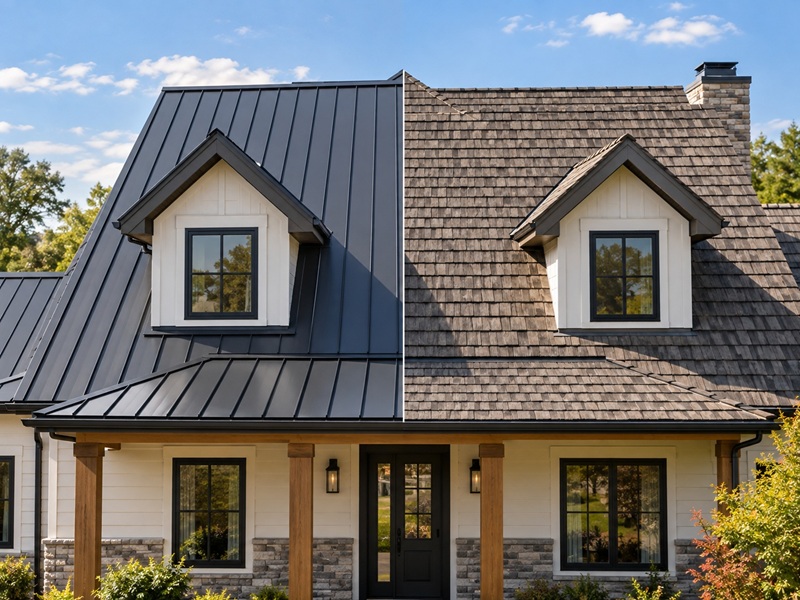
If you are planning a roof replacement in 2027, you’ve probably noticed the old advice of “just pick whatever’s cheapest” doesn’t hold up anymore. Metal roofing and composite shingles are now the two materials homeowners actually compare, since both are built to last decades instead of just getting you through the next storm season. This guide breaks down real costs, lifespan numbers, and which option fits your climate, so you can make a decision that pays off years down the road, not just on installation day.
Quick Answer: Metal roofing and composite shingles are becoming the 2027 standard because they last 30 to 70 years compared to 15 to 30 years for basic asphalt, which means fewer replacement cycles over the life of your home. Metal costs $7 to $15 per square foot installed, composite runs $3 to $10, and the right choice depends on your climate, how long you plan to stay in the home, and whether you’re optimizing for lowest upfront cost or lowest long-term cost.
Key Takeaways
| Takeaway | What It Means for You |
|---|---|
| Metal lasts 40 to 70 years, composite lasts 30 to 50 | Fewer replacements over a typical 25 to 30 year ownership period |
| Metal costs $7 to $15 per sq ft, composite costs $3 to $10 | Composite wins on upfront cost, metal wins over the long run |
| 2026 steel tariffs pushed metal prices up 12 to 18% | Get quotes now if you’re leaning metal, pricing may keep shifting |
| Hail-prone regions often favor composite or impact-rated shingles | Metal handles wind and heat better, composite handles hail impact well |
| Both can qualify for insurance discounts | Ask your carrier directly, discounts vary by material and rating |
For years, homeowners picked a roof based on whatever fit the budget that month. That’s changing. Roofing has quietly turned into a longevity conversation, and Metal Roofing and Composite Shingles are now the two materials leading that shift into 2027.
Why the Roofing Conversation Has Shifted From Price to Longevity
Homeowners are increasingly choosing roofing materials based on total cost over decades, not just the number on the first quote. A cheap roof that needs replacing twice in 40 years often costs more than a pricier roof you only install once.
This shift is driven by a simple reality: labor costs keep climbing, and re-roofing isn’t just a materials expense, it’s tear-off, disposal, and a full crew back on your roof. Every extra roofing cycle adds all of that on top of the material cost itself.
The Problem With Judging a Roof by Upfront Cost Alone
Looking only at the price per square foot hides the real cost of a roof. A $5,000 roof that needs replacing in 20 years and a $12,000 roof that lasts 50 years are not actually $7,000 apart once you run the full math.
Real example: a homeowner who installs a $7,000 composite shingle roof today and needs a full replacement in year 28 has effectively spent close to $14,000 by year 50, once you factor in rising labor costs. A $12,000 metal roof installed today could still be performing at year 50 with zero replacement needed.
Metal Roofing vs. Composite Shingles: Quick Comparison
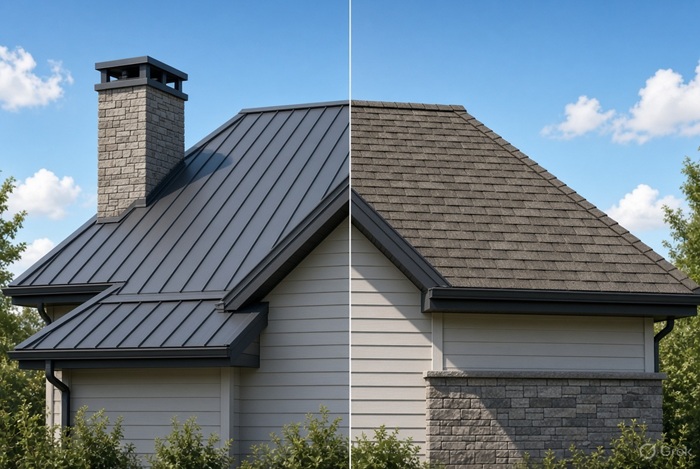
Metal roofing generally outlasts composite shingles by 10 to 20 years, but composite costs less upfront and is easier to repair in small sections. Here’s how the two stack up side by side.
Lifespan Compared
| Material | Typical Lifespan |
|---|---|
| Metal roofing (standing seam) | 40 to 70 years |
| Composite shingles | 30 to 50 years |
| Basic asphalt shingles (for reference) | 15 to 30 years |
Cost Per Square Foot Compared
| Material | Installed Cost per Sq Ft |
|---|---|
| Metal roofing | $7 to $15 |
| Composite shingles | $3 to $10 |
| Basic asphalt shingles (for reference) | $3.50 to $5.50 |
Metal Roofing in 2027: What You’re Actually Paying For
Metal roofing costs more upfront because you’re paying for specialized installation labor and a material that can outlast two or three roof replacement cycles. The higher price tag reflects the labor skill required and the interlocking panel systems that keep the roof watertight for decades.
Standing Seam vs. Corrugated Panels
Standing seam metal roofing uses raised, interlocking seams that hide the fasteners, giving it a cleaner look and better weather protection than corrugated panels. Corrugated metal is cheaper and still durable, but it’s more common on barns and outbuildings than on residential homes aiming for curb appeal.
How Steel Tariffs Are Affecting 2026-2027 Pricing
Steel tariffs introduced in 2026 have pushed metal roofing prices up by roughly 12 to 18% compared to prior years. If you’re leaning toward metal, getting quotes locked in sooner rather than later can protect you from further price creep as material costs continue to shift.
Composite Shingles in 2027: The Budget-Friendly Long-Life Option
Composite shingles blend asphalt with fiberglass and recycled materials to get closer to metal’s lifespan without metal’s price tag. They’re built to resist fading and cracking better than standard asphalt, while still costing significantly less than metal per square foot.
What Makes Composite Different From Basic Asphalt
Composite shingles use reinforced materials and often mimic the look of wood shakes or slate, giving homeowners a premium appearance without the premium price. The added fiberglass and recycled content is what pushes their lifespan from asphalt’s 15 to 30 years up to 30 to 50 years.
Where Composite Shingles Fall Short
- More susceptible to wind uplift in severe storms compared to properly installed metal
- Can still suffer hail damage on lower-end product lines
- Long-term value depends heavily on local climate and roof slope
- Higher-end composite lines can approach metal pricing, narrowing the cost gap
Total Cost of Ownership: Running the Real Numbers Over 25 Years
Over a 25-year window, metal roofing often ends up cheaper than composite once you factor in replacement costs, reduced maintenance, and energy savings. This is where the “expensive roof” argument usually falls apart once you look past year one.
Replacement Cycles: One Roof vs. Two
A composite roof installed today may need a full replacement before year 50, while a metal roof installed at the same time often doesn’t. Over a 25-year ownership period specifically, this usually means zero replacements for metal versus a real possibility of one for composite, depending on the product quality and climate.
Maintenance and Repair Costs Over Time
Metal roofing generally requires less ongoing maintenance since it doesn’t crack, curl, or lose granules the way shingles can. Composite shingles are cheaper and easier to repair in small isolated sections, which matters if you’re dealing with occasional storm damage rather than full roof failure.
Whichever material you choose, pairing it with modern monitoring tools helps you catch small issues before they turn into major repairs. Our guide on smart roof technology, sensors, and AI monitoring covers how leak sensors and drone inspections work with both metal and composite roofing.
Climate and Performance: Which Material Wins Where You Live
The right material depends heavily on your local weather, since hail, wind, and heat each stress roofing materials differently. There’s no single winner across every climate zone.
Hail-Prone Regions
In hail corridors like DFW, San Antonio, and Austin, impact-resistant composite shingles are often the smarter pick, since large hail can dent metal panels while shredding standard shingles entirely. Both materials are available in a Class 4 impact rating, so ask specifically for that rating if hail is a regular concern where you live.
Coastal and High-Wind Areas
In coastal or high-wind regions, metal roofing tends to win because standing seam systems resist wind uplift better than shingle-based products. This matters most in hurricane-prone areas where wind speed, not hail, is the primary threat.
Hot Climates and Cooling Costs
Metal reflects 25 to 40% more solar radiation than asphalt-based shingles, which translates to noticeably lower cooling costs in hot climates. Composite shingles have narrowed this gap somewhat with reflective coatings, but metal still generally holds the energy efficiency edge in extreme heat.
Metal roofing is also the preferred substrate for homeowners planning solar, since standing seam clamps let installers mount panels without drilling into the roof. If you’re weighing solar alongside your roofing decision, our solar roofing guide for 2027 breaks down current costs and incentives in detail.
Does Roofing Material Affect Resale Value and Insurance?
Yes, both metal roofing and composite shingles can influence resale value and insurance premiums, though the effect depends on how long you plan to stay and your insurance carrier’s specific policies. Neither guarantees a discount, but both are worth asking about directly.
Resale Value Impact
If you plan to sell within a few years, a well-maintained composite shingle roof in good condition is usually enough to satisfy buyers without a major price premium. If you’re staying long-term, metal roofing can boost resale value specifically because buyers know they won’t be facing a roof replacement anytime soon.
Insurance Premium Discounts
Expert Tip: Don’t assume your insurance discount automatically applies just because you chose metal or a Class 4 shingle. Call your carrier before you sign a contract and ask them to confirm the exact discount for the specific product and impact rating you’re installing. Discounts vary widely between carriers, and some require documentation from the installer to apply it.
Many insurance carriers offer discounts for impact-resistant or metal roofing because these materials generate fewer storm-related claims. The size of the discount varies significantly by carrier and region, so this is a call worth making before you finalize your material choice.
How to Decide Between Metal and Composite for Your Home
The right choice comes down to your local climate, how long you plan to own the home, and whether upfront cost or long-term cost matters more to your budget. There’s no universally “better” option between the two.
Questions to Ask Before You Choose
- How long do I realistically plan to stay in this home?
- What’s the dominant weather risk here: hail, wind, or extreme heat?
- Does my insurance carrier offer a meaningful discount for either material?
- Can I get a real 25-year cost comparison from my installer, not just a materials quote?
- What’s the warranty coverage on labor, not just materials?
If you want help running these numbers for your specific home, the team at Roofing Cop can walk through both material options and give you a real cost comparison based on your climate and roof, not just a generic price sheet.
Metal Roofing & Composite Shingles FAQs
Is metal roofing worth the extra cost over composite shingles?
For most homeowners staying long-term, yes. Metal’s 40 to 70 year lifespan usually means zero replacements over a typical ownership period, while composite may need one replacement cycle, which often closes or reverses the upfront cost gap.
How long do composite shingles actually last?
Composite shingles typically last 30 to 50 years, well beyond basic asphalt’s 15 to 30 year range. Higher-end composite lines with more fiberglass and recycled content tend to land on the longer end of that range.
Which roofing material handles hail better, metal or composite?
Impact-resistant composite shingles often handle hail better than standard metal panels, since hail can dent metal while shredding basic shingles. Both materials offer a Class 4 impact-rated option, which is worth requesting specifically in hail-prone regions.
Does a metal roof actually lower my home insurance premium?
It can, but it’s not guaranteed and varies by carrier. Many insurers offer discounts for metal or impact-resistant roofing due to fewer storm claims, so confirm the exact discount with your carrier before finalizing your material choice.
Final Take: Which Roofing Material Is the Right 2027 Investment?
Metal Roofing and Composite Shingles are becoming the 2027 standard for the same reason: homeowners are done paying for the same roof twice. Both materials deliver real longevity over basic asphalt, and the right pick genuinely comes down to your climate, your timeline, and your budget priorities, not which one sounds more impressive.
If you’re staying in your home long-term and live somewhere with strong wind or heat, metal roofing is likely the smarter long-term investment. If you’re in hail country or want a lower upfront cost without giving up decades of performance, composite shingles are a legitimately strong choice, not just a cheaper fallback.
2 thought on “Longevity Over Low Price: Why Metal Roofing & Composite Shingles Are the 2027 Standard”