
If you just noticed a water stain on your ceiling or your roofer told you “you’ve got maybe two more winters left in this thing,” you’re probably not here for a history lesson on shingles. You want a number.
So here it is.
How Much Does a New Roof Cost? (Quick Answer)
A new roof typically costs between $5,800 and $47,000, with most homeowners paying somewhere around $9,000 to $13,000 for a standard asphalt shingle roof on an average-sized home. On a per square foot basis, expect to pay roughly $4 to $11, though premium materials like slate or copper can push that number much higher.
The final price depends on a handful of things: the size of your roof, the material you choose, how steep and complicated the roof is, where you live, and what your roofer finds once they start tearing off the old layers. We’ll walk through every one of those factors below, plus show you what a real itemized invoice looks like, so you know exactly what you’re paying for before a contractor ever steps onto your property.
What Determines the Cost of a New Roof?
Two homes with the exact same square footage can get wildly different roofing quotes. Here’s why.
Roof size. This isn’t the same as your home’s square footage. Roofers measure in “squares,” where one square equals 100 square feet of roof surface. A single story ranch with a low pitch might have a roof size close to its floor plan. A two story colonial with dormers and a steep pitch could have a roof that’s 30 to 40 percent larger than the house footprint suggests.
Roof pitch. A flat or gently sloped roof is easier and faster to work on. A steep roof means roofers need harnesses, extra scaffolding, and more time, all of which adds labor cost.
Roof complexity. Chimneys, skylights, dormers, and multiple valleys all require extra flashing and cutting. A simple rectangular roof with no obstructions is always going to be cheaper than one shaped like a puzzle.
Material choice. This is usually the single biggest swing factor. Asphalt shingles and slate tiles can be five or six times apart in price per square foot.
Labor rates. Roofers typically charge $40 to $90 per hour depending on your region, and labor usually eats up 50 to 60 percent of your total bill.
Roof height and accessibility. A roof on a three story home, or one surrounded by trees and tight property lines, takes longer to access safely and costs more to insure for the crew.
Tear off and disposal. Removing your old roof and hauling it away isn’t free. Expect this to add anywhere from $1 to $5 per square foot depending on how many layers need to come off.
Permits. Most municipalities require a permit for a full roof replacement, typically running $100 to $500.
Structural repairs. If your roofer finds rotten decking once the old shingles are off, that’s an added cost nobody can quote you in advance.
Location and climate. Coastal homes may need hurricane rated materials. Northern homes need ice and water barriers. Both requirements add to the price.
Roof Size vs. House Size (Why They’re Not the Same)
Here’s a mistake a lot of homeowners make. They assume a 1,500 square foot house needs a 1,500 square foot roof. In reality, roof overhangs, pitch, and shape almost always make the actual roof surface larger than the home’s footprint. A steep 8/12 pitch roof, for example, can add 20 percent or more surface area compared to a flat roof over the same floor plan. Always ask your roofer for the actual measured roof size in squares, not an estimate based on your home’s listed square footage.
How Roof Pitch Affects Price
Roof pitch is measured as a ratio, like 4/12 or 8/12, which tells you how many inches the roof rises for every 12 inches it runs horizontally. Anything above a 6/12 pitch is generally considered steep and starts requiring safety equipment. Anything above 9/12 is considered very steep and can add $1,000 to $3,000 or more to your total labor cost simply because the crew works slower and needs more safety gear.
Labor vs. Material Cost: Where Your Money Actually Goes
On a typical asphalt roof job, labor accounts for roughly 55 to 60 percent of the total bill, with materials making up the rest. That means on a $10,000 roof, you’re likely paying around $5,500 to $6,000 just for the crew’s time and expertise. This is worth remembering when you’re comparing quotes. A contractor charging noticeably less isn’t necessarily using cheaper shingles. They might be cutting corners on labor, using a smaller crew, or skipping steps like proper underlayment.
Roof Replacement Cost by Material
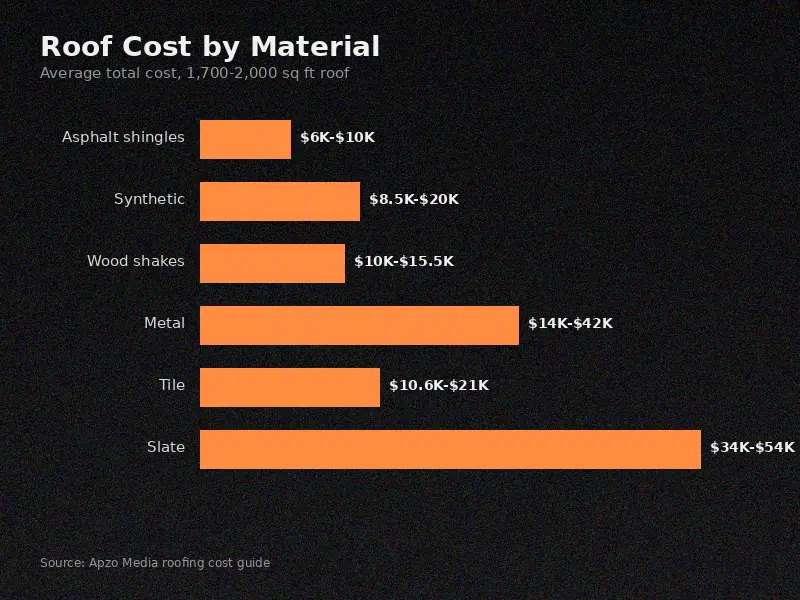
| Material | Cost per Square Foot | Average Total Cost* | Typical Lifespan |
|---|---|---|---|
| Asphalt shingles | $3.50 to $6.00 | $6,000 to $10,000 | 20 to 30 years |
| Synthetic/composite | $5 to $12 | $8,500 to $20,000 | 25 to 50 years |
| Wood shakes/shingles | $6 to $9 | $10,000 to $15,500 | 30 to 50 years |
| Metal (standing seam) | $8 to $25 | $14,000 to $42,000 | 40 to 70 years |
| Tile (clay/concrete) | $6.30 to $12.30 | $10,600 to $21,000 | 50 to 100 years |
| Slate | $20 to $32 | $34,000 to $54,000 | 100+ years |
*Based on an average 1,700 to 2,000 sq ft roof.
Asphalt Shingles: Most Popular, Most Affordable
Asphalt is the default choice for a reason. It’s affordable, it’s easy to install, and almost every roofer in the country knows how to work with it. There are three tiers: basic 3-tab shingles, architectural shingles (thicker, better looking, longer warranty), and premium architectural shingles that can last close to 50 years. If you’re not sure which to pick, architectural shingles are usually the sweet spot between cost and durability for most homeowners.
Metal Roofing: Higher Upfront, Lower Lifetime Cost
Metal roofing costs two to four times more than asphalt upfront, but it can last two to three times as long. It also holds up better in heavy snow, doesn’t burn, and can lower your cooling bills in hot climates because it reflects heat. If you’re planning to stay in your home for 20-plus years, metal often works out cheaper per year of ownership than replacing an asphalt roof twice.
Tile, Slate and Premium Materials
Clay tile, concrete tile, and slate are the roofs you see on Mediterranean style or historic homes. They’re heavy (your roof structure may need reinforcement to support the weight), they’re expensive, and they last a genuinely long time, sometimes over a century for slate. These materials make sense for homeowners planning to stay put for decades or those restoring a historic property where authenticity matters.
Cost Per Year of Use: Which Material Is Actually the Best Value?
If you divide total cost by expected lifespan, the picture changes. A $9,000 asphalt roof lasting 25 years works out to about $360 per year. A $20,000 metal roof lasting 50 years works out to about $400 per year, close to the same annual cost but with far less hassle, fewer repairs, and better resale appeal. This is the math worth doing before you assume “cheaper material” automatically means “cheaper roof.”
Roof Replacement Cost by Roof Size
| Roof Size (sq ft) | Estimated Cost Range |
|---|---|
| 1,000 | $4,000 to $11,000 |
| 1,500 | $6,000 to $16,500 |
| 2,000 | $8,000 to $22,000 |
| 2,500 | $10,000 to $27,500 |
| 3,000 | $12,000 to $33,000 |
These figures assume mid-range asphalt shingles on a moderately pitched roof. Steeper pitches, complex layouts, or premium materials will push you toward the higher end or beyond it.
Real Cost Breakdown: What a Roof Replacement Invoice Actually Looks Like
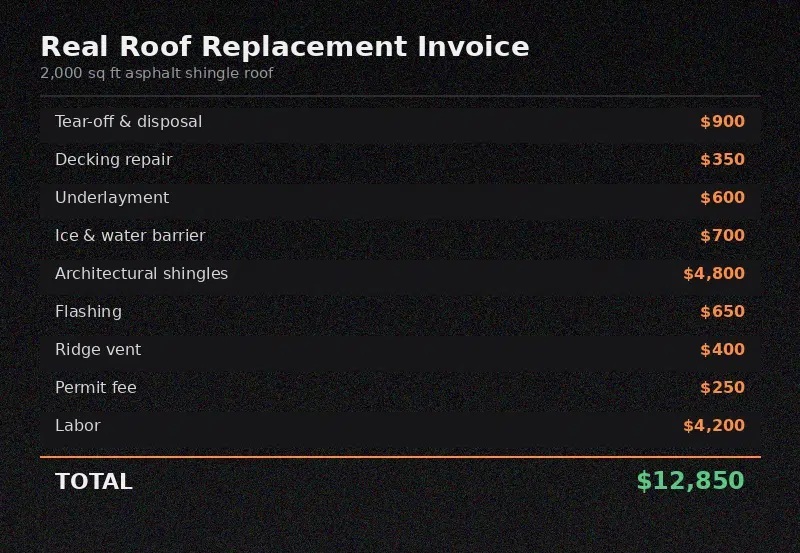
Ranges and tables are useful, but nothing explains cost better than seeing an actual invoice. Here’s a realistic breakdown for a 2,000 square foot asphalt shingle roof replacement, a job type millions of homeowners get done every year.
| Line Item | Cost |
|---|---|
| Tear off and disposal of old roof | $900 |
| Decking repair (2 sheets of plywood, found during tear off) | $350 |
| New underlayment | $600 |
| Ice and water barrier (edges, valleys) | $700 |
| Architectural asphalt shingles | $4,800 |
| Flashing (chimney, vents, skylight) | $650 |
| Ridge vent and ventilation | $400 |
| Permit fee | $250 |
| Labor | $4,200 |
| Total | $12,850 |
Notice the decking repair line. This is a perfect example of why the quote you get before work starts and the final bill can differ. Most contractors can’t know exactly what condition your plywood decking is in until the old shingles come off. A reasonable contractor will call you, show you the damage (often with photos), and get approval before doing the extra work. If a contractor just adds charges without ever showing you what they found, that’s worth questioning.
Hidden and Unexpected Roof Replacement Costs
Nobody likes surprises on a bill, especially a bill this size. Here are the costs that tend to catch homeowners off guard.
- Rotten or damaged decking. As shown above, this is the most common surprise cost and can add $500 to $2,000 depending on how much needs replacing.
- Code required upgrades. Some areas now require ice and water shield or improved attic ventilation that your old roof never had. This isn’t optional if it’s in your local building code.
- Permit and inspection fees. Usually modest, but easy to forget when budgeting.
- Dumpster and disposal surcharges. If your old roof has multiple layers, tear off and disposal costs go up.
- HOA approval delays. Some homeowners associations require material or color approval before work starts, which can push back your timeline and occasionally your contractor’s scheduling fees.
- Flashing replacement around chimneys and skylights. Old flashing often needs replacing even if the rest of it looks fine, since it’s the most common source of leaks.
A good habit: ask your contractor directly, “What could make this price go up once you start?” Any experienced roofer will have a straight answer.
Roof Replacement Costs by Region
Where you live changes both labor rates and the materials your roof legally needs.
| Region | Typical Cost Range (2,000 sq ft asphalt roof) | Why |
|---|---|---|
| Northeast | $10,000 to $18,000 | Higher labor costs, ice and water barrier requirements for snow load |
| Southeast | $8,000 to $15,000 | Hurricane and wind resistant materials often required in coastal counties |
| Midwest | $8,000 to $14,000 | Moderate labor costs, hail resistant shingles sometimes recommended |
| Southwest | $9,000 to $16,000 | Heat resistant materials, higher demand for reflective/cool roofing |
| West/Pacific | $11,000 to $20,000 | Highest labor costs and permit fees, plus wildfire-rated material requirements in some areas |
These are general patterns, not guarantees. Always compare quotes from local contractors, since city-level labor rates and material availability can shift things quite a bit even within the same region.
Repair vs. Replace: Which Costs Less in the Long Run?
Not every roof problem means you need a full replacement. Here’s how to think about it.
Repair costs. Small roof repairs, like fixing a section of missing shingles or resealing flashing around a vent, typically run $300 to $1,500.
When repair makes sense. If your roof is under 15 years old, the damage is localized (one section, not spread across the whole roof), and you haven’t had repeated repair calls in the last year or two, patching it is usually the smarter financial move.
When replacement makes sense. If your roof is past 20 years old, if repair costs are creeping above 30 to 40 percent of what a full replacement would cost, or if you’ve called a roofer for the third repair in two years, you’re often better off replacing. At that point, you’re paying to patch a roof that’s going to need full replacement soon anyway.
A simple gut check: if a roofer quotes you $2,500 to repair a 22-year-old asphalt roof that would cost $10,000 to replace, that’s 25 percent of the replacement cost on a roof that’s already near the end of its expected life. Most homeowners are better off putting that money toward the new roof instead.
How to Save Money on a Roof Replacement
- Get at least three quotes. Prices for the same job can vary by thousands of dollars between contractors.
- Avoid peak season if you can. Fall and spring are the busiest (and pricier) times for roofers. If your roof can wait, scheduling in winter or late summer sometimes gets you a better rate.
- Ask about overlay vs. full tear off. In some cases, and where local codes allow it, installing new shingles over one existing layer can save money. Just know this hides your decking from inspection and typically isn’t recommended if you plan to stay in the home long term.
- Look into manufacturer certified installer discounts. Some shingle manufacturers offer better warranties and occasional discounts when you use one of their certified installers.
- Bundle projects. If your gutters also need replacing, doing both at once can sometimes save on labor scheduling and material delivery costs.
How to Pay for a New Roof
A roof replacement is a big expense, and most homeowners don’t pay for it entirely out of pocket. Here are the common options.
- Savings. The simplest option if you have it, since it avoids interest entirely.
- Homeowners insurance. If your roof was damaged by a covered event like a windstorm or hail, your policy may cover some or all of the replacement cost minus your deductible. Normal wear and aging generally aren’t covered, so this only applies to sudden damage.
- Home equity loan or HELOC. These typically offer lower interest rates than personal loans since your home secures the loan, but they do put your home on the line if you can’t repay.
- Personal loans. Faster to get and don’t require home equity, but usually come with higher interest rates.
- Contractor financing. Many roofing companies offer in-house financing plans, sometimes with promotional 0 percent APR periods. Read the fine print on what happens if you don’t pay it off within the promo window.
- FHA Title I loans. A federally backed loan option specifically for home improvements, including roofing, often with more flexible qualification requirements than conventional loans.
- State or utility rebates. Some states and utility companies offer rebates for energy-efficient or reflective “cool roof” materials. Worth a quick search for your specific state before you finalize your material choice.
How to Avoid Roofing Scams and Overpaying
Roofing is unfortunately a magnet for scammers, especially after major storms. A few things to watch for:
- Door to door “storm chasers.” Be cautious of contractors who show up unsolicited right after a storm claiming they noticed damage on your roof and pushing you to sign immediately.
- Cash only demands or large upfront payments. A reputable contractor won’t ask for full payment before any work is done. A modest deposit is normal, but be wary of anyone asking for the full amount upfront.
- No proof of license or insurance. Always ask for and verify a contractor’s license number and proof of liability insurance. Most states let you check licenses online through the state contractor licensing board.
- Pressure to sign same day. Legitimate contractors expect you to compare quotes. High pressure sales tactics are a red flag.
- The cheapest quote isn’t always the best deal. If one quote is dramatically lower than the others, ask why. It could mean lower quality materials, an inexperienced crew, or corners being cut on things like proper ventilation or underlayment that you won’t notice until years later.
- Understand your warranty types. A manufacturer’s warranty covers defects in the shingles themselves. A workmanship warranty from your contractor covers installation errors. Make sure you’re getting both, and get the terms in writing.
Signs You Need a Roof Replacement
- Your roof is 20 to 25 years old (for asphalt) and hasn’t been replaced
- Shingles are curling, cracking, or missing in multiple spots
- You’re finding granules from your shingles collecting in gutters or downspouts
- Water stains or drips are showing up on your ceiling or in your attic
- Your attic shows signs of moisture, mold, or daylight coming through the roof boards
- The roof deck feels soft or spongy when walked on
- You’ve called a roofer for repairs more than once or twice in the past couple of years
If you’re seeing two or more of these signs, it’s worth getting a professional inspection sooner rather than later. Small leaks left unaddressed can turn into much bigger, more expensive structural problems.
Frequently Asked Questions
How much does a new roof cost on average?
Most homeowners pay between $9,000 and $13,000 for a standard asphalt shingle roof replacement, though total costs can range from about $5,800 to over $47,000 depending on size, material, and location.
How much does a 2,000 sq ft roof cost to replace?
Expect to pay roughly $8,000 to $22,000 for a 2,000 square foot roof, with the exact number depending heavily on material choice and roof complexity.
What is the cheapest roofing material?
Asphalt shingles, particularly basic 3-tab shingles, are generally the most affordable option, running about $3.50 to $6 per square foot installed.
What roofing material lasts the longest?
Slate roofing can last over 100 years, making it the longest lasting common roofing material, followed by clay and concrete tile at 50 to 100 years and metal roofing at 40 to 70 years.
Does homeowners insurance cover a new roof?
It can, but only if the damage was caused by a covered event like a storm, hail, or wind, and only after your deductible is met. Roof replacement due to normal aging or lack of maintenance typically isn’t covered.
How long does a roof replacement take?
Most single-family home roof replacements take one to three days for asphalt shingles, though metal, tile, or slate roofs can take longer due to the more specialized installation process.
What is the best time of year to replace a roof?
Late spring through early fall offers the best weather conditions for installation, but this is also peak demand season, so prices tend to be higher. Scheduling in late winter or early spring, when weather allows, can sometimes get you a better rate.
Can I finance a new roof?
Yes. Common options include home equity loans, HELOCs, personal loans, contractor financing plans, and FHA Title I home improvement loans.
Is it cheaper to install a new roof over an old one?
It can lower upfront costs since you skip tear off and disposal, but most contractors don’t recommend it long term. It hides your roof decking from inspection, adds weight to your structure, and most building codes only allow one additional layer.
How do I know if I need a roof repair or a full replacement?
If your roof is under 15 years old with localized damage, repair is usually enough. If it’s over 20 years old, has widespread damage, or repair costs are creeping close to 30 to 40 percent of a full replacement, replacement is usually the better long-term investment.
Final Thoughts
A new roof is one of the bigger checks you’ll write as a homeowner, but it doesn’t have to be a mystery. Once you understand what drives the price, size, material, pitch, labor, and location, the numbers stop feeling random and start making sense.
The best next step is simple: get at least three detailed, itemized quotes from licensed local contractors, and use everything you’ve read here to ask smart questions about what’s included and what might change once the work begins. A roof done right, at a fair price, is one of the best investments you can make in your home’s protection and resale value.