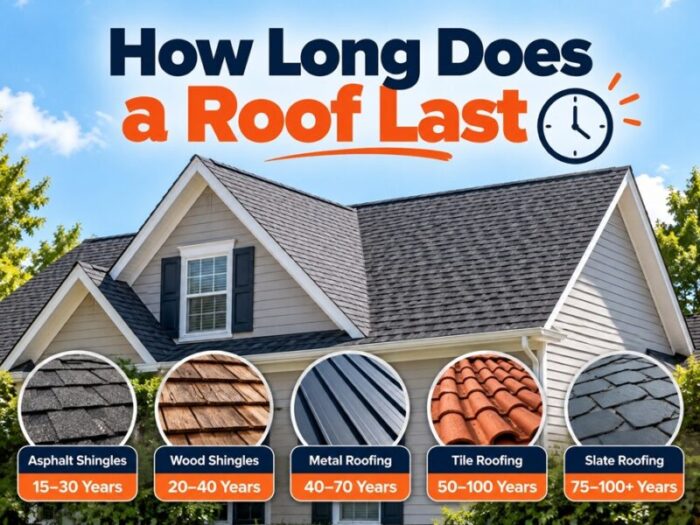
How long does a roof last? Most roofs last between 25 and 50 years, but the range is huge. A basic asphalt roof can be done in 15 years, while a slate roof can outlive the house. Your material matters most, and climate, installation, and upkeep decide where in that range you land.
This guide gives you real roof lifespan numbers for the most common roof types, shows what cuts years off a roof, and tells you when to start planning a replacement.
-
How Long Does a Roof Last on a House?
On a typical house, a roof lasts about 20 to 30 years if it’s asphalt, and 50 years or more if it’s metal, tile, or slate. One common average across all materials is around 30 years, but your number depends on what’s over your head.
| Roof material | Typical lifespan |
|---|---|
| 3-tab asphalt shingles | 15 to 20 years |
| Architectural asphalt shingles | 25 to 30 years |
| Wood shakes and shingles | 15 to 30 years |
| Flat roofs (TPO, PVC, EPDM and similar) | 20 to 30 years |
| Metal (steel, aluminum) | 40 to 70 years |
| Concrete tile | 40 to 75 years |
| Clay tile | 50 to 100 years |
| Slate | 75 to 150 years or more |
| Thatch (UK figures) | 15 to 40+ years |
Sources disagree by a few years on almost every row, so treat these as planning ranges, not promises.
Count from the roof, not the house. A 40-year-old house with a roof installed 12 years ago has a 12-year-old roof. Look for permits, invoices, or the date on a warranty card.
How Long Does a Shingle Roof Last?
A shingle roof usually lasts 15 to 30 years, depending on the type of shingle. Basic 3-tab shingles sit at the short end, and architectural (laminated) shingles last longer.
Asphalt shingles cover roughly 80 percent of US homes, so this is the number most homeowners need.
| Shingle type | Typical lifespan | Why |
|---|---|---|
| 3-tab | 15 to 20 years | Thinner and cheaper |
| Architectural | 25 to 35 years | Thicker, better in wind and heat |
| Premium or designer | Up to about 40 years | Only in ideal conditions, so don’t plan around it |
Real example: Heat and temperature swings wear shingles out fast. In Arizona, big temperature changes crack shingles, so a roof there can age faster than the same shingle in a milder climate. Ask local roofers what they see before you trust a national average.
A warning sign: curling shingles are a classic clue that the roof is nearing the end of its life. If you see curling, read the signs you need roof replacement before the next storm.
How Long Does a Metal Roof Last?
A metal roof usually lasts 40 to 70 years, and some systems go longer. That’s two to three times the life of a standard shingle roof.
The type of metal and panel style change the number:
| Metal roof type | Typical lifespan |
|---|---|
| Aluminum tile panels | 50 to 80 years |
| Steel tile panels | 40 to 60 years |
| Standing seam | 40 to 70 years |
| Corrugated or exposed-fastener panels | 30 to 50 years |
Why the spread? Standing seam panels hide their fasteners, so there are fewer holes where leaks and rust can start. Exposed-fastener panels depend on rubber washers, and those wear out long before the metal does.
What cuts a metal roof’s life short:
- Large patches of rust, especially near cut edges and fasteners
- Thin-gauge metal (thickness is one of the biggest factors in lifespan)
- Skipped maintenance, since even a metal roof loses years without upkeep
Cost over time: If you plan to stay in the house 25 years or more, metal can cost less over its lifetime than replacing asphalt once or twice. Run the numbers for your region before you decide. The Metal Roofing Alliance is a good place to compare panel types.
How Long Does a Thatched Roof Last?
A thatched roof lasts roughly 15 to 40 years, depending on the material, and well-kept water reed roofs can go longer. Most data comes from the UK, where thatching is still common. It’s rare in the US.
| Thatch material | Typical lifespan |
|---|---|
| Long straw | 15 to 25 years |
| Combed wheat reed | 25 to 35 years |
| Water reed | 25 to 40+ years |
| Ridge (the top cap) | Renew every 10 to 15 years |
With regular maintenance, some thatched roofs have reached 60 years.
Why the ridge matters: The ridge wears out first. A thatcher can renew it without replacing the whole roof, which is why a thatched roof gets refreshed several times before it’s fully rethatched.
What helps thatch last:
- A steep pitch, because steeper roofs shed water faster
- Moss control, since moss and lichen slow rainwater and speed up rot
- A skilled local thatcher, because tight, even layering decides how well it sheds water
Owning a thatched home? Check insurance terms and fire-risk rules early. They can affect your costs more than the roof’s age does. The Thatch Advice Centre has practical upkeep guidance.
How Long Do Tile, Slate, Wood, and Flat Roofs Last?
Slate and clay tile last longest, often 75 to 100 years or more, while wood and flat roofs usually last 15 to 30 years. The high-end materials cost more up front and weigh more, so your house needs the structure to carry them.
- Slate (75 to 150+ years): Often outlives the house. Copper or stainless steel nails and flashing help it reach those numbers.
- Clay tile (50 to 100 years): Great in warm climates. Freezing and thawing can damage tile in colder regions.
- Concrete tile (40 to 75 years): Cheaper than clay and still long-lived.
- Wood shakes (15 to 30 years): Moisture retention is the main enemy.
- Flat roofs (20 to 30 years): TPO and PVC membranes often sit near 20 years, sometimes a few more.
Hidden catch: On a tile roof, the underlayment usually fails around 20 to 30 years, long before the tile does. Replacing it means lifting the tile, so ask about it when you buy or inspect.
If your flat roof has a parapet wall, the cap along the top edge matters too. A failing roofing cop lets water into the wall and can age the roof faster than the membrane itself.
What Shortens the Life of a Roof?
The biggest lifespan killers are the wrong material for your climate, poor installation, and skipped maintenance. Any one of these can take 5 to 10 years off a roof.
| Factor | What it does | Example |
|---|---|---|
| Climate | Heat, UV, ice, and storms wear materials differently | Clay tile suffers where freeze-thaw cycles are harsh |
| Installation quality | Bad flashing, nailing, or ventilation causes early leaks | Nails sitting proud of the shingle |
| Material thickness | Thicker material lasts longer | Thicker shingles and panels outlast thin ones |
| Underlayment | A hidden layer can fail before the surface | Under tile, it often fails at 20 to 30 years |
| Maintenance | Small leaks and clogged gutters grow | A blocked valley holding water for years |
Check your attic too. A hot, poorly vented attic bakes shingles from underneath. It’s one of the cheapest fixes and one of the most commonly missed.
Storms count. Hail and wind can cut a roof’s life short in a single afternoon. If that happens, learn how to file a roof insurance claim after a storm before you pay for repairs out of pocket. For wind and storm resistance research, see IBHS.
How Many Years Does Your Roof Have Left?
Subtract your roof’s age from the typical lifespan for its material, then adjust for climate and condition. It’s a rough estimate, but it tells you when to start budgeting.
Example: You have an 18-year-old architectural shingle roof. The typical range is 25 to 35 years, so you have about 7 to 17 years left on paper. If you live somewhere hot, or the attic runs hot, aim for the short end. If it’s been well kept in a mild climate, the long end is realistic.
| Where you are in the lifespan | What to do |
|---|---|
| First half | Maintain and inspect each year |
| Last third | Get a professional inspection and start budgeting |
| Past the range | Inspect now and plan replacement |
This is a planning rule of thumb, not a guarantee. A single storm can change the math.
Signs Your Roof Is Near the End
Knowing how long a roof lasts only helps if you also know what failure looks like. If your roof is past the middle of its life and shows any of these problems, read our guide to the signs you need roof replacement and book an inspection.
By roof type:
- Asphalt: cracked, loose, curling, or distorted shingles
- Metal: large rust patches and leak damage
- Clay or concrete tile: cracked or slipped tiles, missing mortar, tile pieces in the gutters
- Slate: missing, chipped, or slipped pieces
- Thatch: dark wet patches under the eaves, or spars poking up through the surface
Inside the house:
- Brown stains on ceilings
- Daylight in the attic
- Damp or musty insulation
- Shingle granules collecting in the gutters
Not sure how much life your roof has left? A quick inspection can tell you whether you need a repair or a full replacement. Request a roof inspection.
How to Make Your Roof Last Longer
The easiest way to add years to a roof is to inspect it twice a year and fix small problems fast. Most roofs don’t fail suddenly. They fail slowly, then all at once.
- Inspect each spring and fall, and after major storms. Our seasonal roof maintenance checklist shows what to look for.
- Clean gutters so water doesn’t back up under the roof edge.
- Trim overhanging branches that scrape the surface or drop debris.
- Remove moss and debris gently, without pressure washing shingles. If the buildup is heavy, professional roof cleaning is safer than doing it yourself.
- Fix flashing and sealant around chimneys, vents, and valleys early.
- Check attic ventilation so heat and moisture can escape.
- Hire licensed pros for repairs, and keep records for warranty claims.
Expert tip: [Insert a real tip from your own jobs, such as the leak source you find most often, or a repair that bought a client five more years.]
[Author name, credential]
FAQs
How long does a roof last?
Most roofs last 25 to 50 years, but it depends on the material. Asphalt shingles last about 15 to 30 years, metal lasts 40 to 70, and tile and slate can reach 50 to 100 years or more. Climate and maintenance can shift those numbers.
How long does a roof last on a house?
A typical residential asphalt roof lasts 20 to 30 years. Houses with metal, tile, or slate roofs can go 50 years or longer. Count from the roof’s installation date, not the home’s age, and compare it to the range for your material.
How long does a shingle roof last?
A shingle roof lasts about 15 to 20 years for 3-tab shingles and 25 to 35 years for architectural shingles. Hot climates, poor ventilation, and storm damage can shorten that. Curling, cracking, and bare patches mean replacement is close.
How long does a metal roof last?
A metal roof typically lasts 40 to 70 years. Aluminum and standing seam systems tend to last longest, while exposed-fastener panels sit closer to 30 to 50 years. Rust, loose fasteners, and worn sealant are the most common reasons for repairs or early replacement.
How long does a thatched roof last?
A thatched roof lasts about 15 to 25 years for long straw, 25 to 35 for combed wheat reed, and 25 to 40 or more for water reed. The ridge needs renewing every 10 to 15 years. Steep pitch and regular upkeep extend the life.
Get a Clear Answer for Your Roof
Wondering how long your roof will last? Our team can check the age, material, and condition of your roof and give you a straight answer on repair versus replacement.
2 thought on “How Long Does a Roof Last? Lifespan by Material (2026 Guide)”