
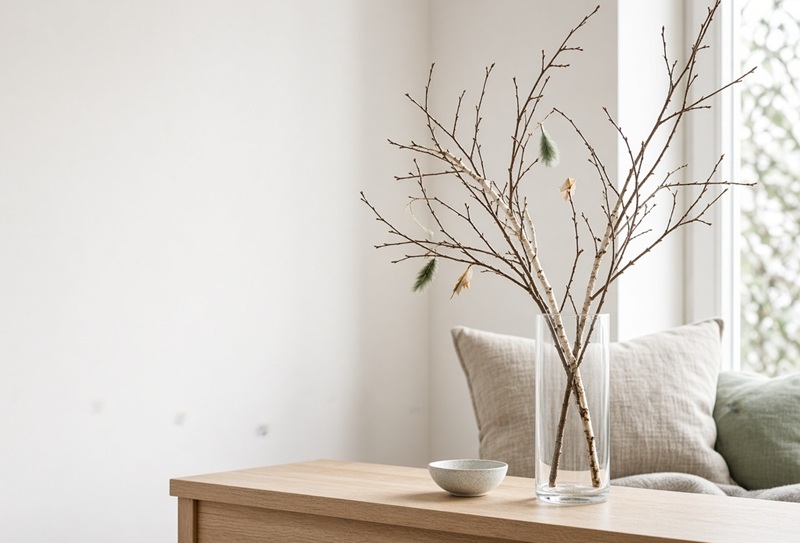
Pyntekvister is a Norwegian word that means “decorative twigs.” In home décor, it describes using natural branches, in a vase or as a hanging display, to bring a calm, earthy look into a room.
You may have seen the word on Pinterest or a décor blog. This guide explains what it actually means, where the idea comes from, and how to try it at home with almost no budget.
What Does Pyntekvister Mean?
Pyntekvister combines two Norwegian words: “pynte” (to decorate) and “kvister” (twigs or branches). The word comes from Norway, where natural elements have long been part of everyday home décor.
So the literal translation is “decorative twigs.” There is no official rulebook. It is a style, not a strict tradition, which is why it is so easy to adapt.
Why Do Websites Describe It Differently?
Because the term is new online, and small sites use it in different ways. Some describe it as Nordic branch décor. Others call it a Scandinavian paper and branch craft for ornaments. A few use it to mean decorative wall trim.
The twig meaning matches the Norwegian word, so that is the one this guide follows. If you see “trim” or “molding” explanations, treat them as a loose modern usage.
Real Examples of Pyntekvister Style Décor
The best-known example is påskeris, the Norwegian Easter twig. Families put bare birch branches in a vase and hang them with colourful feathers and small ornaments.
Here are three more ideas you can copy:
- Forced spring branches: Cut forsythia, cherry, or pussy willow branches in late winter and keep them in water. They usually bloom indoors within one to three weeks.
- Festive branches: Wrap warm white fairy lights around dry branches for Diwali, Christmas, or a wedding table.
- Minimal bedroom style: One slim branch in a narrow glass bottle on a bedside table. That is all it needs.
Expert Tip: Always dry foraged branches before bringing them indoors. Lay them in a dry, airy spot for a few days, or bake them on a tray at a low temperature (around 100°C) for 30 to 40 minutes while you watch them closely. This helps remove hidden insects and moisture, the two things that ruin an arrangement within a week. Replace the plan with your own tested method and photos if you have them, because firsthand detail is what Google rewards most.
How to Style Pyntekvister in 7 Steps
You need dry twigs, a vase, and about 15 minutes. Follow these steps:
- Collect fallen branches. Do not break living ones.
- Wipe off dust and let them dry fully.
- Choose a simple vase in glass, ceramic, or a clean jar.
- Group branches in odd numbers, such as three or five.
- Mix tall and short branches for depth.
- Keep the palette earthy: white, beige, grey, and green.
- Add one small accent, like dried flowers or a ribbon.
Where to Find Twigs Safely
The safest source is branches that have already fallen in your garden, a park, or on your terrace after wind or rain. Avoid cutting from private trees or protected areas without permission.
Storm days are good for collecting, but they are also a good time to check your own roof. Overhanging trees drop twigs, leaves, and moss onto roofs and into gutters, which can trap water. If you notice blocked drainage or damaged tiles, a roofing professional can inspect the problem before it becomes a leak. If moss or dirt has built up, this roof cleaning guide on costs and when to hire a pro explains what to expect.
Natural vs. Artificial Branches
Natural branches cost almost nothing but last a few months, while artificial ones last for years but look more uniform. Pick based on your climate and how often you like to change your décor.
| Natural | Artificial | |
|---|---|---|
| Cost | Free to low | Medium |
| Look | Unique and organic | Neat and even |
| Lifespan | A few months | Years |
| Care | Dry first, replace occasionally | Dust only |
| Best for | Dry or moderate climates | Humid areas |
Common Mistakes to Avoid
The three most common mistakes are crowding the vase, using damp branches, and placing them near flames. Dry twigs catch fire easily, so keep them away from diyas, candles, and heaters. Stick to two or three colours so the branches stay the focus.
Frequently Asked Questions
What does pyntekvister mean in English?
It means “decorative twigs” or “decorative branches.”
Is pyntekvister a Norwegian tradition?
The word is Norwegian, and branch décor such as påskeris is a real Norwegian custom. Pyntekvister as a design style is a modern label with no formal definition.
Can I make pyntekvister at home?
Yes. Dry twigs, a vase, and 15 minutes are enough.
Is it safe to use real branches indoors?
Yes, if they are fully dry and kept away from flames and damp corners.
Does it work in a small flat?
Yes. One arrangement near a window or on a console table changes the feel of a room without taking space.
Final Thoughts
Start with one vase and one corner. Pyntekvister works because it is simple, cheap, and easy to change with the seasons.