
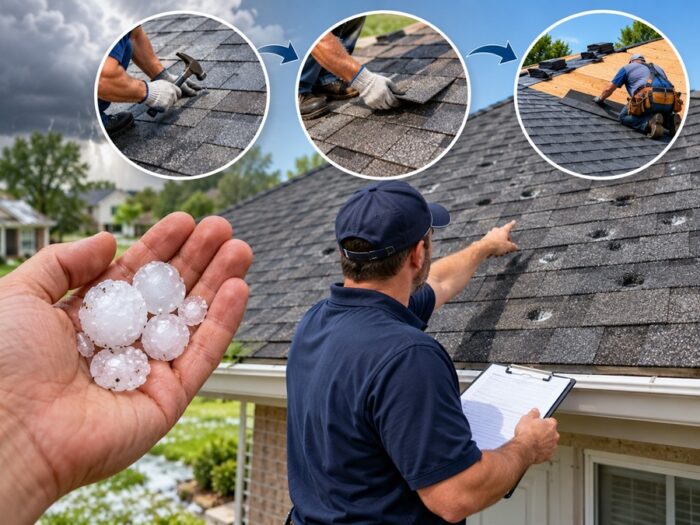
Hail can leave a roof looking fine from the yard and still cause leaks a few months later. After a storm, the real question is simple. Do you need a small repair, a partial replacement of one or two slopes, or a full new roof?
This guide helps you decide using what roofers and insurance adjusters actually check: roof age, how many hail hits they find, and the condition of the decking under the shingles. You’ll also see typical costs, how test squares work, and when a cheap patch ends up costing more.
Quick answer: Repair the roof if it still has plenty of life left, the hail hits are limited to a small area, and the decking is dry and solid. Replace a slope, or the whole roof, if hits are spread across several slopes, the roof is near the end of its life, or you already have leaks.
Insurers usually decide by counting hits inside a 10×10 ft test square on each slope. The hit count that triggers replacement differs by company, so ask for yours in writing.
Start With A Hail Damage Reality Check
Your first job after a hailstorm is to find out whether hail only bruised the shingle surface or damaged the roof system underneath. Not every hailstorm harms a roof. Hail generally needs to reach about 1¼ inches (half-dollar size) to damage heavy composite or wood shake shingles. Smaller hail can still hurt an older, worn roof.
Signs to look for:
- Dark spots where granules are missing
- Soft or bruised spots when you press a shingle
- Cracked shingles or an exposed fiberglass mat
- Dented vents, gutters or metal flashing
- New ceiling stains or damp attic insulation
A professional hail damage roof inspection shows how deep the damage goes. If you already see water stains, follow the attic steps in the Roof Leak Repair guide.
Spot Repairs After Hail: When Small Fixes Make Sense
Spot repairs mean swapping out a limited number of damaged shingles or tightening a few pieces of flashing while leaving the rest of the roof in place. They usually make sense when the roof is fairly young, damage is grouped in a few patches and there is no sign of soft or rotted decking under those areas.
On an asphalt shingle roof, that work often looks like lifting the shingles above the bad piece, pulling roofing nails, sliding out the damaged shingle, then installing and sealing a new one so it lies flat again. If you want to see how that kind of fix compares with a larger project, the breakdown in Roof Repair vs Roof Replacement gives a clear side by side view of short term work compared with a full job.
Spot Repair vs Partial vs Full Replacement
| Option | Best when | Typical U.S. cost | Watch out for |
|---|---|---|---|
| Spot repair | Few damaged shingles, solid decking, no leaks | About $400 to $2,000 for typical repairs, and up to about $3,500 for major repairs | Color mismatch, and more repairs needed after the next storm |
| Partial (slope) replacement | Hits are concentrated on one or two slopes | Falls between repair and full replacement. No reliable national range exists, so get written quotes | Old and new sections age differently, and warranty terms may change |
| Full replacement | Hits on most slopes, an older roof, or repeated leaks | Typically $5,000 to $10,000, with an average near $8,000. Larger homes and premium materials cost more | Higher upfront cost, but fewer surprises later |
Costs are national estimates from published guides. Your local price depends on roof size, pitch, material and decking repairs.
Rule of thumb many contractors use: if repair quotes climb toward about 30% of a full replacement, compare both options carefully. This is a contractor guideline, not a rule, so label it that way on your page.
How Far Spot Repairs Can Go Before Replacement
Spot work is a short term play. It stops making sense once damage is scattered all over or the roof is already near the end of its rated life. When crews are replacing shingles on many slopes, labor time jumps and matching color turns into a real headache, especially on roofs that have already faded in the sun.
If more than a modest share of visible shingles show bruising, bald spots or edge cracks, a good roofer will usually suggest stepping up from scattered work to a more defined repair on one section, or they will tell you it is time to compare that spend with the ranges in the Roof Inspection Cost guide so you know whether it is time to start talking through full replacement numbers.
Spot Repairs And Insurance Claims
Insurance adjusters often try to approve only small patches after a hailstorm, especially when there is no active leak yet. That can be reasonable on a relatively new roof with clean, limited damage, but it can also leave you with a patchwork surface that ages unevenly and is harder to claim on again.
Before you sign off on a limited scope payment, compare their estimate with what a local roofer finds during a detailed check, and line that up with the ranges in the Roof Inspection Cost guide so a few more test squares do not move you from a near replacement roof back to scattered patching that will not hold up.
What is a hail test square?
An adjuster marks a 10-by-10-foot area on a slope and counts the hail hits inside it. The area should be 100 square feet and is placed on each roof slope.
How many hits mean replacement?
There is no single national number. Policies differ by insurer, and eight hits is a common figure. Other sources give slightly different ranges. The City of Fort Collins says roughly 6 to 8 hits per square may mean replacement. A University of Missouri Extension article mentions formulas like 10 verified hits per 100 square feet.
Does zero hits mean no damage?
Not always. A 2026 Claims Journal article explains that a single test square can miss damage, because hit counts vary across a slope. If your claim is denied after one square, ask for more test areas on the same slope.
Partial Roof Fixes After Hail
Partial fixes mean replacing one or more complete slopes of the roof while leaving the others in place. This is common when one side of the house took the brunt of the storm or when earlier repairs failed on a single area and let water in.
On these jobs, roofers usually tear off shingles and underlayment down to the deck on the affected slopes, repair soft or damaged wood, then install new underlayment, flashings and shingles on that portion. If the roof is close to the age where full replacement is on the horizon, compare what you see at home to the warning signs laid out in Signs You Need a Roof Replacement (Not Just a Repair) so you are not sinking more cash into a roof that is already aging out.
Pros And Cons Of Partial Replacement
The big upside of a partial fix is short term cost control and focusing work where the hail hits are concentrated. You renew the worst slopes, cut down leak risk in that area and you are not paying to remove shingles that are still doing their job.
The trade off is simple. You now have an older section tied into a new section, which can mean color mismatch, different wear rates and a future project to bring the rest of the roof up to the same standard. Some manufacturers also tighten warranty terms when only part of a roof is upgraded, so you want that in writing before you approve the plan.
How Partial Fixes Affect Hail Damage Roof Repair Cost
The biggest drivers of hail damage roof repair cost, on partial work are roof size, pitch, tear off labor and how much damaged decking needs to be replaced under the hit slopes. Material choice matters too, because swapping from basic three tab shingles to thicker architectural shingles raises materials cost but can help with future hail resistance.
Labor pricing can climb if access is tight or a crew needs extra safety gear on steep sections, especially on taller houses. For bigger partial jobs where replacement might be close in price, many homeowners find it helpful to compare contractor quotes with the ranges in New Roof Cost so the numbers you are seeing sit in a realistic context.
When A Full Hail Damage Roof Replacement Is The Better Move
A full hail damage roof replacement becomes the better move once damage is widespread, the roof is already older, or multiple repairs have been stacked over time. At that point the odds of leaks, hidden deck problems and repeat service calls usually outweigh what you save by clinging to worn out sections.
On a full replacement, shingles and underlayment come off down to bare decking, weak or rotten wood is swapped out, then new underlayment, flashings, shingles and roof accessories go on in one pass. When you start pricing that level of work, the numbers in the It Cost to Replace a 2,000 Sq Ft Roof guide and the broader Roof Replacement Cost estimates will help you judge if your bids are sitting in a normal range.
How Roof Age And Condition Change The Math
Age is the quiet factor that can push you from repairs to replacement even when hail damage looks modest from the yard. Once a roof is near or past its typical lifespan, every new storm exposes more weak points in shingles and flashings.
Continuous patching on an end of life roof often means chasing one leak after another over several seasons, and you still end up paying for a new system before long. Before you commit to another round of spot work, compare that rolling spend to a single planned replacement with the help of the ranges in New Roof Cost so you are not surprised later.
How To Decide: Repair Hail Damage Roof Or Replace It
The real decision is whether fixing the existing roof is the smartest use of your budget for the next decade or if starting fresh is cleaner. Start with roof age, how much of each slope shows damage and whether you already have leaks or interior stains that point to hidden problems.
If your roof is relatively young, the damage is limited to a few slopes and the decking checks out solid, a scoped plan to repair hail damage roof areas can be a sound choice. If the roof is older, hits are scattered on most sides or you already have more than one leak point, putting your money into a full replacement usually gives you fewer surprises over the next years. The detailed checklist in the Hail Damage on a Roof: How to Spot It, Document It, and Decide What Comes Next guide can help you sanity check what contractors and adjusters are telling you.
Working With Contractors And Insurance Without Losing Control
Good contractors document damage with clear photos, explain options in plain language and separate labor from materials on the proposal. They also spell out local code requirements, such as needed ice and water shield in valleys or around penetrations, so you understand why certain line items are in the bid.
When insurance is involved, your job is to match the scope of work to the actual damage instead of accepting the first number that shows up on a form. Bringing a roofer’s written findings to your adjuster meeting keeps the conversation grounded in what the roof really needs rather than the cheapest patch that passes a quick drive by look. If the inspection turns up problems beyond hail, posts like Roof Leak Repair can give you a sense of how those issues get handled.
Maintaining A Hail Hit Roof After Repairs
Once the work is finished, your goal is to keep small issues from becoming the next leak. Regular visual checks from the ground after heavy rain or wind, a quick look in the attic for damp insulation or new stains and cleaning debris from valleys and gutters all help you catch early trouble.
Periodic professional checks after bigger storms can pick up lifted shingles, failed sealant or minor flashing problems before they turn into interior damage. If organic buildup has been a long term issue on your roof, the guide on Roof Cleaning explains how cleaning and inspections work together so fresh hail damage is easier to see next time.
Conclusion
Sorting out whether you should repair hail damage roof sections or move straight to a full replacement comes down to roof age, how widely the hail hits are spread and how long you plan to stay in the home. Small, well scoped repairs and partial fixes can be a good use of money on younger roofs, while older, heavily bruised systems are usually safer to replace in one planned project. If you’d like help with this, reach out through our Contact Us page.
If you are standing in the yard looking up at a storm hit roof and still feel stuck, get a proper inspection, collect clear photos and then walk through realistic options with a roofer you trust, or reach out to Roofing Cop with specific questions about your house, timing and budget.
Frequently Asked Questions
Q1. How do I know if hail actually damaged my roof?
Ans. You will usually see dark spots where granules are missing, cracked or torn shingles, dented metal vents or soft spots when shingles are pressed. An interior check for new ceiling stains or damp attic insulation is also useful, and a professional inspection is the safest way to catch less obvious damage.
Q2. How long after a hailstorm can I wait to get the roof checked?
Ans. You should schedule an inspection within days or weeks, not months, especially if you suspect leaks. Waiting too long can let minor bruises turn into full shingle failures and can also create problems with insurance claim deadlines.
Q3. Will small hail always damage my roof?
Ans. No, small hail does not always harm a roof, especially if it is newer and built with thicker shingles. Damage depends on hail size, wind speed, roof age and existing wear, so even modest storms can cause problems on an already tired roof.
Q4. Can I repair just a section of my roof after hail?
Ans. Yes, many roofs can be repaired in sections when damage is limited to certain slopes or areas. A roofer will check how confined the damage is, the age of the roof and how easily materials can be matched before recommending a partial fix.
Q5. Does replacing my roof after hail increase my home value?
Ans. A new, professionally installed roof can support resale value and make home inspection negotiations easier. Buyers and their inspectors are usually more comfortable with a documented, newer roof than one with multiple older repairs.
Q6. Will my premiums always go up after a hail damage claim?
Ans. Premium changes after a hail claim depend on your insurer, policy and local claim patterns. Some carriers adjust rates after large regional storms, while others focus more on individual claim history, so it is worth asking your agent how they typically handle storm related claims.
Q7. How many hail hits mean I need a new roof?
Ans. It depends on your insurer. Adjusters count hits in a 10×10 ft test square on each slope. Common thresholds run from about 6 to 10 hits, and eight is often cited. Ask your insurance company for its exact rule in writing.
Q8. What size hail can damage shingles?
Ans. Hail of about 1¼ inches or larger can damage heavy composite shingles, according to a state insurance regulator. Smaller hail can still damage older or worn roofs, so inspect after any strong hailstorm.