Key takeaways
- Roof cleaning removes surface buildup such as algae, moss, lichen and debris. It does not repair leaks, cracked shingles or worn-out materials.
- The right method depends on your roofing material, its condition and the manufacturer’s guidance. High pressure can damage asphalt shingles.
- Roof cleaning cost varies by property. Compare written estimates that list the method, the scope and what is included.
- DIY roof cleaning carries real fall and damage risks. Steep, tall, wet or fragile roofs are usually better left to professionals.
Dark streaks, green patches or crusty gray spots on a roof are easy to notice from the driveway. They are much harder to judge. Is it only cosmetic? Does it need cleaning, or does it point to a bigger problem? What happens if you clean it the wrong way?
This guide answers those questions. It covers how roof cleaning works, how soft washing differs from pressure washing, what affects the price, when DIY makes sense, and how to choose a local company. If you would rather have someone look at your roof directly, you can also ask Roofing Cop for an inspection and a property-specific estimate.
What Is Roof Cleaning?
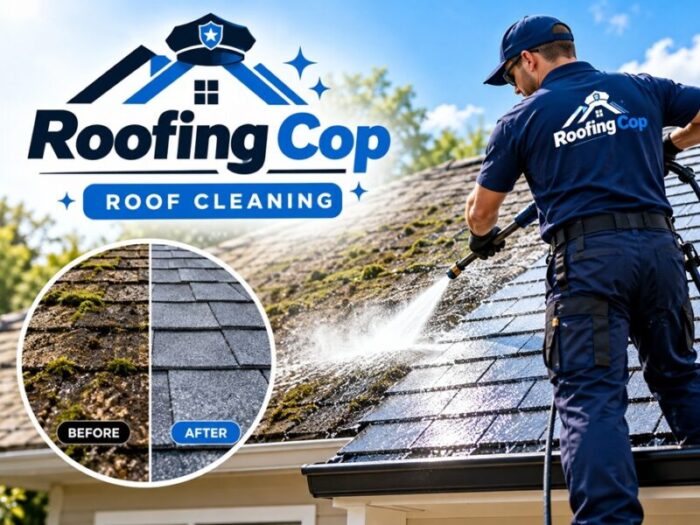
Roof cleaning is the process of removing algae, moss, lichen, dirt and debris from a roof’s surface using methods suited to the roofing material. Done correctly, it improves appearance and gives a professional a chance to spot maintenance issues early. It is a surface treatment and does not repair leaks, cracked shingles or worn materials.
Some companies call the same service roof washing. Both terms usually describe the same job, though the method can differ.
Signs your roof may need cleaning
- Dark or black streaks running down the roof, often on shaded slopes
- Green, fuzzy moss patches, especially where leaves and moisture collect
- Gray or orange crusty spots (often lichen)
- Heavy leaf, needle or debris buildup in valleys and along edges
- Uneven color that makes one slope look older than another
- Growth spreading toward gutters or roof edges
Common types of roof buildup
| Buildup | What it looks like | Why it matters |
|---|---|---|
| Algae | Dark streaks or stains | Mostly cosmetic at first, but it can spread and it changes how the roof looks |
| Moss | Thick green or brown clumps | Can hold moisture against the roof and may lift or shift some materials |
| Lichen | Flat, crusty gray or orange patches | Attaches firmly to the surface and can be harder to remove |
| Dirt and pollution | Gray or dull film | Affects appearance and can trap debris |
| Leaves and debris | Piles in valleys and gutters | Holds moisture and can block drainage |
Roof cleaning vs. roof repair vs. roof replacement
Cleaning improves the surface. Repair fixes specific damage, such as cracked or missing shingles and failing flashing. Replacement is for roofs that are near or past the end of their service life.
A stained roof is not necessarily a failing roof, and a clean roof can still have problems. That is one reason a professional roof inspection is worth doing before or alongside cleaning.
Why Is Roof Cleaning Important?
Roof cleaning matters mainly for three reasons: it improves how a home looks, it removes growth that can hold moisture against the roof, and it gives someone a close look at the roof’s condition.
Curb appeal. Streaked or mossy roofs make an otherwise well-kept home look neglected. This matters most to homeowners preparing to sell or refinance.
Moisture and growth. Moss can hold moisture against roofing materials, and heavy growth can lift or shift some of them. Algae streaks are usually more of a cosmetic concern early on. The effect on any particular roof depends on the material, its age and the local climate, so it is best to have a professional look at heavy growth.
Early problem detection. Someone who is on or near the roof can notice loose shingles, damaged flashing or clogged valleys before they turn into leaks.
Cleaning does not automatically add a set number of years to a roof’s life. Appropriate maintenance can help keep roofing materials in good condition, but actual results depend on the material, its condition, your environment and the manufacturer’s guidance.
How Do You Clean a Shingle Roof?
A shingle roof is cleaned by inspecting it first, choosing a low-pressure method that suits asphalt shingles, applying an appropriate cleaning solution, rinsing gently from the top down and inspecting again. The key point is that the process starts with assessment, not with a pressure washer.
This is the general sequence professionals follow when they clean shingles:
- Inspect the roof. Look for cracked, curling or missing shingles, heavy granule loss and areas of damage. Damaged areas may need repair before or instead of cleaning.
- Identify the material and check guidance. Confirm the shingle type and read the manufacturer’s recommendations and warranty terms.
- Choose the method. For asphalt shingles, this is usually a low-pressure approach.
- Protect the property. Wet down or cover plants, protect windows, doors, air conditioning units and outdoor furniture, and plan for runoff.
- Apply a suitable cleaning solution. It should be appropriate for the roof and the type of buildup.
- Allow the solution to work. It needs time to break down algae or moss.
- Rinse safely. Rinse gently from the top down so water flows the way it would in normal rain, not up and under shingles.
- Inspect again. Check the results, look for missed areas, and note anything that needs repair.
Why asphalt shingles need careful handling
Asphalt shingles are covered in small mineral granules that protect the surface from sun and weather. Aggressive pressure can knock those granules loose, and forcing water under shingle edges can cause other problems. Many shingle manufacturers give specific cleaning guidance, and some warranties address it. Industry groups such as the Asphalt Roofing Manufacturers Association (ARMA) also publish guidance on roof algae and cleaning. Check your manufacturer’s instructions before any method is used, and ask any company you hire what they plan to use and why.
This is general information. Only an inspection of your roof can tell you what your specific shingles can tolerate.
What Is Soft Wash Roof Cleaning?
Soft wash roof cleaning is a low-pressure method that applies a cleaning solution to the roof, lets it break down algae, moss and stains, then rinses gently. The solution does most of the work instead of force, which is why the method is often used on asphalt shingles and other delicate roofing.
How soft washing differs from pressure washing
Traditional pressure washing uses a strong stream of water to blast away dirt. That works well on hard surfaces such as concrete driveways, but it is a poor fit for many roofs. Soft washing relies on the cleaning solution to loosen growth so the rinse can stay gentle.
| Pressure washing | Soft washing | Low-pressure rinse or manual removal | |
|---|---|---|---|
| How it works | High-pressure water | Low pressure plus cleaning solution | Gentle rinse, brushing or hand removal |
| Typical use | Driveways, patios, hard surfaces | Many roofs and siding | Spot areas, delicate surfaces, light debris |
| Main concern on roofs | Granule loss, surface damage, water forced under roofing | Chemical handling and runoff control | May not remove heavy buildup |
The role of cleaning solutions
The solution is what makes soft washing work, and it is also what requires care. Products vary, and each one should be used according to its label and the roofing manufacturer’s guidance. Runoff can affect plants, so a careful crew will protect landscaping, control where rinse water goes and follow local rules.
Is soft washing always the right choice?
No. Soft washing is often a good fit, but the correct method depends on the roofing material, its age and condition, and the type of buildup. Tile, metal, wood and flat roofs each have their own considerations. A reputable roof cleaning company should explain why it recommends a particular method for your roof.
Roof Cleaning vs. Pressure Washing: Which Is Right for Your Roof?
Roof cleaning is a service defined by its goal: removing buildup safely from a roof. Pressure washing is one tool that may or may not be appropriate for that goal. On most asphalt shingle roofs, high-pressure washing is not recommended, and professionals typically choose lower-pressure methods.
A quick example (hypothetical): A homeowner sees dark streaks on a shingle roof and asks two companies for quotes. One plans to use a high-pressure washer for speed. The other explains that they use a low-pressure application with a cleaning solution, and describes how they protect the landscaping and check the roof first. The second answer is not automatically the better company, but it shows more awareness of how shingles behave. The homeowner should ask both to put their method in writing.
Can you pressure wash a shingle roof?
You generally should not use high-pressure washing on a shingle roof. It can strip protective granules and force water under shingles, and it may affect your warranty. Many manufacturers recommend gentler methods. If you are unsure, ask your shingle manufacturer or a qualified roofing professional before anyone starts.
Pressure washing still has a place in exterior maintenance for driveways, walkways and patios. If you are comparing services for the rest of your property, you can ask about pressure washing for those surfaces separately from the roof.
Different Roofs, Different Rules
Roof materials do not all respond to cleaning the same way. This table gives general cautions. It does not replace manufacturer guidance or a professional inspection.
| Roof type | General consideration |
|---|---|
| Asphalt shingle | Avoid high pressure; protect granules; check manufacturer guidance |
| Concrete or clay tile | Tile can crack under foot traffic; walking on the roof should be minimized and done by experienced people |
| Metal | Can be very slippery when wet; avoid abrasive tools that scratch the finish |
| Flat or low-slope (membrane) | Follow the membrane manufacturer’s instructions; avoid punctures and standing water |
| Wood shake or shingle | Delicate; get professional advice before any cleaning |
Shingle Roof Cleaner: What Should You Look For?
A shingle roof cleaner should be intended for use on roofing, appropriate for asphalt shingles, and used exactly as its label describes. Stronger is not automatically better. An overly harsh product can damage shingles, harm plants or create safety problems.
Look for these points:
- Compatibility. The product should state that it is suitable for the roofing material you have.
- Manufacturer alignment. Check whether your shingle manufacturer says anything about cleaning products or methods.
- Clear instructions. Dilution, dwell time, rinse method and safety precautions should be spelled out.
- Safety information. Read the safety data sheet, and use protective gear such as eye protection and gloves. Never mix cleaning chemicals.
- Environmental considerations. Think about where runoff goes, including plants, pets and storm drains.
The word “roof cleaner” also describes a person. Homeowners searching for a roof cleaner are often looking for a company, and the later section on choosing a local provider covers that.
Best Roof Cleaner: How to Choose One
There is no single best roof cleaner for every home, because the right choice depends on the roof and the problem. Use these questions to narrow it down:
- What is the roof made of? Asphalt shingles, tile, metal and flat roofs need different approaches.
- What is growing on it? Algae streaks, moss and lichen do not always respond to the same treatment.
- What does the manufacturer say? This can affect both the method and your warranty.
- How will it be applied and rinsed? Application method affects safety and results.
- What happens to runoff? Protect landscaping and follow local rules.
- Who is using it? A product that is reasonable for a trained crew may not suit a homeowner working alone on a ladder.
A company or product that promises to be best for every roof is a warning sign. Look for clear explanations tied to your specific roof.
How Much Does Roof Cleaning Cost?
Roof cleaning cost depends on roof size, pitch, material, access, how much buildup there is, the cleaning method and local labor costs. Most companies quote per property after assessing these factors, so prices vary by home and location. Ask for a written estimate that lists the method and what is included.
What affects the price
- Roof size. More surface area means more time, materials and labor.
- Roof pitch. Steeper roofs take more time and safety equipment.
- Roofing material. Delicate or specialty materials can require more careful methods.
- Accessibility. Multi-story homes, limited access, landscaping and nearby obstacles all add work.
- Amount and type of buildup. Heavy moss usually takes more effort than light algae.
- Cleaning method. Low-pressure treatment, manual removal and follow-up steps differ in time and materials.
- Location and market. Local labor costs, insurance costs and demand affect what companies charge.
- Additional services. Gutter cleaning, minor repairs and other exterior services can change the total.
How much should roof cleaning cost?
A fair price is one that matches the work described, not simply the lowest number. When you compare quotes, check that each one covers the same scope, the same method and the same protection for your property.
A quick example (hypothetical): A homeowner gets three quotes. One is far lower than the others but does not say what method will be used. One is higher and lists the cleaning method, plant protection, cleanup and a written description of what is covered. The third does not mention insurance. The cheapest quote may leave out steps, so it is not automatically the best value. The most useful comparison is line by line.
If you want a number for your own roof, a company has to see the property. You can request a property-specific estimate from Roofing Cop, and it is reasonable to ask what the estimate includes.
Roof Cleaning Near Me: How to Find a Local Service
To find good roof cleaning near you, start with local search results, check each company’s Google Business Profile and reviews, ask for proof of insurance, compare written estimates, and choose a company that explains its method clearly for your type of roof.
Use this checklist when you evaluate a roof cleaning company:
- Google Business Profile. Look for a real address or service area, current photos and consistent contact details.
- Reviews. Read a range of them, look at how recent they are and see how the company responds to complaints.
- Insurance. Ask for proof of liability insurance and workers’ compensation coverage.
- License where applicable. Requirements vary. In California you can look up contractors through the Contractors State License Board (CSLB), and you can ask the company which license applies to the work it is proposing.
- Experience with your roof type. A company that mostly cleans shingles may not be the right choice for a tile or flat roof.
- Examples of past work. Ask to see before-and-after photos of actual projects.
- Written estimate. It should describe the method, the scope and the price.
- Clear communication. A good company answers questions plainly and does not pressure you.
- Warranty or guarantee terms. If a company offers one, get the terms in writing.
Questions worth asking before you book:
- What method will you use on my roof, and why?
- How will you protect my plants and property?
- Are you insured, and can I see proof?
- What does your estimate include and exclude?
- What happens if something is damaged?
Roof Cleaning Services in Los Angeles
Homeowners looking for roof cleaning in Los Angeles should choose a provider who inspects the specific roof, explains the method in writing and understands the local mix of roof types and conditions. The same general rules apply as anywhere else, but some local factors are worth thinking about.
Climate. Los Angeles generally gets less rain than many other parts of the country, so moss may be less common on many roofs than in wetter regions. Algae can still show up, especially on shaded slopes and in areas with more moisture. Dust, dirt and tree debris are also common reasons to have a roof looked at. The right cleaning approach depends on what is actually on your roof, not on what is typical in your region.
Roof types. Many homes in the area have asphalt shingle roofs, and others have tile or low-slope roofs. Each type calls for its own care, and tile in particular can crack if walked on carelessly.
Runoff and local rules. Wash water and cleaning solutions can affect plants and storm drains, and local stormwater requirements may apply. It is fair to ask any company how it handles runoff.
Why an inspection matters. Two roofs on the same street can differ in age, material, slope and condition. A property-specific look is the best way to decide what method makes sense.
Homeowners in the area can contact Roofing Cop to ask about roof cleaning for their property, including which method may suit their roof and what the estimate would include.
DIY Roof Cleaning: Can You Do It Yourself?
You can maintain some parts of a roof yourself, but do it yourself roof cleaning is often not a good idea. Working on a roof involves serious fall risks, and the wrong method or product can damage roofing materials. Steep, tall, wet or fragile roofs are usually better handled by trained professionals.
Why roof work is risky
- Falls and slips. Roofs can be slippery, especially when wet or covered in algae or moss. A fall from a roof can cause serious injury.
- Damage to roofing. Excess pressure, harsh scrubbing or the wrong product can damage shingles and other materials.
- Chemical handling. Cleaning solutions can irritate skin and eyes, and mixing products can be dangerous.
- Property and landscaping damage. Runoff can harm plants and stain surfaces below.
- Warranty concerns. Improper cleaning could affect coverage.
Lower-risk things homeowners can do
- Inspect the roof from the ground, using binoculars if helpful
- Take photos of streaks, moss or damage to show a professional
- Trim overhanging branches where it is safe to do so, which can reduce shade and debris
- Keep gutters clear (using proper ladder safety)
- Ask a professional to inspect and recommend a method
When DIY does not make sense
Skip it if the roof is steep, the home has more than one story, the surface is wet, the growth is heavy, or you are not sure what the roofing material is or how it should be cleaned.
A quick example (hypothetical): A homeowner sees dark streaks on a two-story home and thinks about renting a pressure washer. The roof is steep and the material is asphalt shingle. The equipment could remove granules, and working on a steep slope raises the fall risk. Asking for a professional inspection and quote would be the safer choice.
When Should You Hire Professional Roof Cleaning Services?
Professional roof cleaning services make the most sense when the roof is steep, the home is more than one story, access is difficult, growth is extensive, the roofing material is fragile, or you are unsure which method is right. Professionals have the equipment, safety training and experience to do the work with less risk.
Consider hiring a roof cleaning company if:
- The roof pitch is steep or the home is multi-story
- Access is difficult because of landscaping, fencing or tight spaces
- There is heavy moss, lichen or widespread algae
- The roof is tile, wood, metal or another material that needs special care
- You do not have the right safety equipment
- You are not sure what is on the roof or what method to use
Roofing Cop can inspect your roof, explain what is affecting it and give you a written estimate. If cleaning is not the right fix, that assessment can also point to a repair or another next step.
What to Expect During a Professional Roof Cleaning
A typical professional visit follows a predictable pattern, though details vary by company and roof:
- Inspection and quote. The company looks at the roof and recommends a method.
- Preparation. You may be asked to move vehicles, patio furniture and anything else near the house. The crew protects plants and delicate areas.
- Cleaning. The company applies its solution and rinses using the agreed method.
- Cleanup and review. The crew clears debris, checks the results and points out any issues they saw.
Ask each company how long the job is expected to take, since timing depends on roof size, access and method. Some growth can also continue to fade in the days after treatment, so ask what results to expect and how long they usually take to appear.
How Often Should You Clean Your Roof?
There is no single schedule that fits every roof. How often you clean depends on climate, tree cover, roof material, slope, moisture, how quickly buildup returns and the manufacturer’s guidance. As a general habit, inspect your roof at least once a year and after major storms, and clean it when you see algae, moss or heavy debris.
Factors that can shorten the time between cleanings:
- Heavy shade from nearby trees
- Frequent falling leaves and debris
- Areas that stay damp for long periods
- Roof slopes that get less direct sun
If growth comes back quickly, it may help to look at the cause. Trimming branches, keeping gutters clear and improving airflow or sunlight can all make a difference. A professional can advise on what is realistic for your home.
Roof Cleaning FAQs
How much does roof cleaning cost?
It depends on roof size, pitch, material, access, buildup and the cleaning method. Most companies quote per property, so prices vary. Request a written estimate that lists the method and what is included.
How much should roof cleaning cost?
A fair price matches the work described. Compare quotes for the same scope and method, and be careful with quotes that are far lower or higher than the others without a clear reason.
What is soft wash roof cleaning?
It is a low-pressure method that uses a cleaning solution to loosen algae, moss and stains before a gentle rinse. It is often used on asphalt shingles, but the right method depends on the roof.
How do you clean a shingle roof?
Inspect the roof, confirm the material and manufacturer guidance, use a low-pressure method, protect the surroundings, apply a suitable solution, rinse gently from the top down and inspect again. Because of the safety risks, this work is often best done by professionals.
What is the best roof cleaner?
There is no single best product. The right one depends on the roof material, the type of buildup and the manufacturer’s guidance. Follow the label, and never mix chemicals.
Can you pressure wash a shingle roof?
High-pressure washing is generally not recommended for asphalt shingles because it can strip granules and force water under them. Check your manufacturer’s guidance first.
Is DIY roof cleaning safe?
It can be risky. Falls are a serious hazard, and improper methods can damage the roof. Steep, tall, wet or fragile roofs are best left to trained professionals.
How often should a roof be cleaned?
It varies with climate, shade, roof material and how quickly growth returns. Inspect yearly and after big storms, and clean when needed.
How long does roof cleaning take?
The time depends on roof size, access, buildup and method. Ask the company for an estimate of the schedule when you get your quote.
Is roof cleaning worth it?
It can be, especially if you have visible algae, moss or debris and want to improve appearance and keep the roof in good condition. It is not a substitute for repairs, so have the roof inspected if you suspect damage.
What should I look for in a roof cleaning company?
Look for insurance, appropriate licensing where required, experience with your roof type, a clearly explained method, a written estimate and real examples of past work.
How do I find roof cleaning near me?
Search locally, check Google Business Profiles and reviews, ask for proof of insurance, and compare written estimates from more than one company.
Your Next Step
Start with what you can see. If your roof has streaks, moss or debris, take a few photos from the ground and note the roofing material if you know it. Then decide whether the situation calls for a professional look. Steep, tall or fragile roofs, and any roof with heavy growth, usually do.
The most useful thing you can do is get a property-specific assessment before anyone touches the roof, and get the method, scope and price in writing. To do that, contact Roofing Cop to request a roof cleaning estimate or schedule an inspection.
This article is general information and is not a substitute for an on-site inspection or manufacturer guidance.
1 thought on “Roof Cleaning: How It Works, What It Costs, and When to Hire a Pro”