
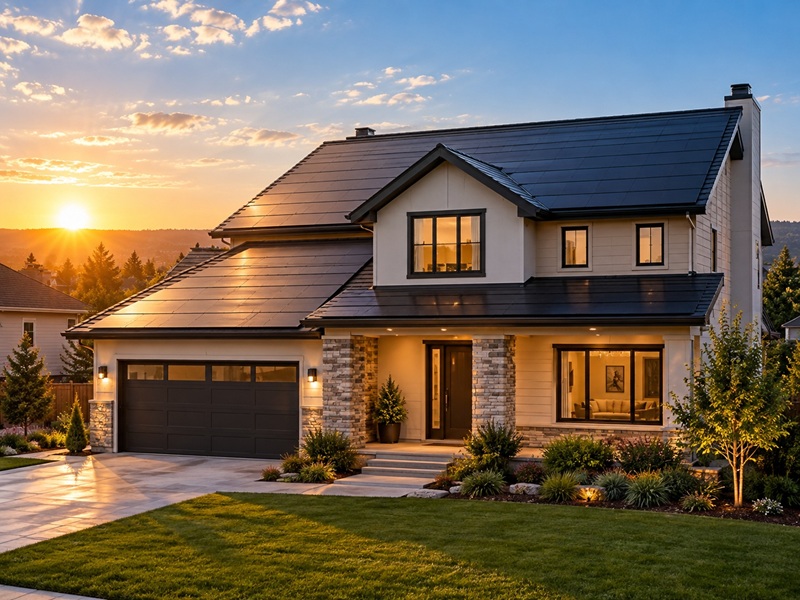
Solar Roofing has changed a lot in the last two years, and not always in the way most articles online tell you. If you are thinking about going solar in 2027, the biggest shifts are not about new tech. They are about money: what tax credits are gone, what is still available, and what your roof actually needs to make this worth it. Here is the real, current picture.
Key Takeaways
| Takeaway | What It Means for You |
|---|---|
| Federal tax credit (25D) expired Dec 31, 2025 | Owned systems installed in 2026+ get $0 federal credit |
| Commercial credit (48E) still active through 2027 | Leases and PPAs can pass along indirect savings |
| Solar shingles are nearing price parity with panels | The choice is now more about looks than budget |
| Payback period has stretched by 2 to 4 years | Check your state’s incentives before you commit |
| Roof condition matters more than ever | Replace an aging roof before or during your solar install |
What Is Solar Roofing? (Quick Definition for Beginners)
Solar Roofing means solar panels or solar shingles that are built into your roof instead of mounted on top of it. Instead of a separate rack system sitting above your shingles, the solar material becomes part of the roof surface itself.
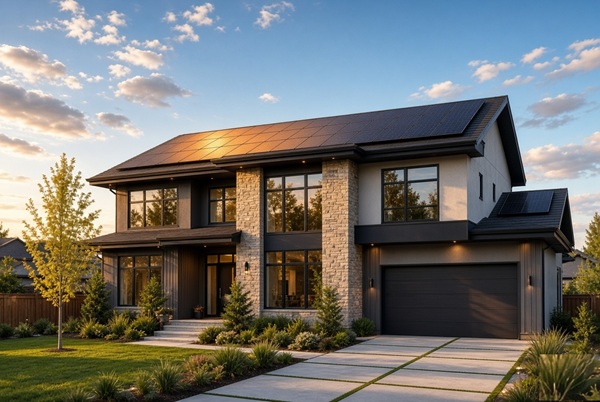
This matters because it changes both the look of your home and how the system is installed. Some homeowners want the clean, low-profile look. Others just want the cheapest way to cut their power bill. Both paths fall under the same broad category, but they are not the same product.
Solar Shingles vs Traditional Panels: What’s the Difference?
Solar shingles replace your actual roofing material. Traditional panels sit on brackets above your existing roof. That’s the core difference, and everything else (cost, efficiency, installation time) flows from it.
| Feature | Solar Shingles | Traditional Panels |
|---|---|---|
| Installation | Replaces the roof | Mounted on existing roof |
| Look | Blends in, low profile | Visible, raised panels |
| Cost per watt | Higher | Lower |
| Best use case | New roof or full re-roof | Existing roof in good shape |
| Repair access | More involved | Easier to remove and reinstall |
If your roof still has 10+ years of life left, traditional panels almost always make more financial sense. Shingles make sense when you need a new roof anyway and want to combine both projects into one.
What Is BIPV (Building-Integrated Photovoltaics)?
BIPV is the technical term for any solar product that acts as both the roofing material and the power generator at the same time. Solar shingles are the most common residential example of BIPV.
You’ll see this term a lot in manufacturer spec sheets and industry reports, so it’s worth knowing even though most homeowners just call it “solar roofing” or “solar shingles” in conversation.
Why 2027 Is a Turning Point for Solar Roofing
2027 matters because solar roofing is finally getting close to the same price as a regular roof with panels bolted on top. For years, the integrated look came with a steep price premium. That gap is closing.
At the same time, federal incentives have shifted hard, which is the part most 2027 content online has not caught up with yet.
Solar Roofing Is Nearing Price Parity With Traditional Panel Systems
CertainTeed, one of the bigger names in solar shingles, has publicly said it’s aiming to price its integrated solar roofing close to what a new roof plus a standard mounted panel system would cost by 2027. That’s a real shift from a market where the integrated look used to cost thousands more.
If that pricing holds up in your area, the decision between shingles and panels becomes less about budget and more about how much you actually care about the visual difference.
Rising Utility Costs and Grid Outages Are Driving Adoption
Homeowners are not just going solar to save the planet. A lot of it comes down to utility bills that keep climbing and power grids that keep failing during storms and heat waves. Solar paired with a battery gives you both savings and backup power, which is a combination more people are actively shopping for.
New Material and Efficiency Advances to Watch
Monocrystalline cells continue to dominate residential installs because they pack more output into less roof space. Expect to see more matte black finishes, better impact resistance for hail-prone regions, and shingle products that are easier to individually replace instead of tearing out a whole section.
The Federal Solar Tax Credit Has Changed. Here’s What’s Actually True in 2026 to 2027
The 30% federal tax credit for homeowner-owned solar systems is gone. It ended on December 31, 2025, and there is no partial credit or phase-down for systems installed after that date. If you buy or finance solar outright in 2026 or later, you get $0 back from that specific federal credit.
This is the single most important fact to get right before you talk to any installer, because a lot of quotes and online calculators still subtract 30% by default.
What Happened to the 30% Residential Solar Tax Credit (Section 25D)?
Section 25D was the federal credit that let homeowners claim 30% of their solar and battery costs back on their taxes. The One Big Beautiful Bill Act (OBBBA), signed in July 2025, ended this credit early, about seven years ahead of its original 2034 phase-out schedule.
If your system was placed in service by December 31, 2025, you can still claim the full 30% on that year’s tax return using IRS Form 5695. If it goes in during 2026 or later and you own the system outright, that credit simply does not apply anymore.
Do Solar Leases and PPAs Still Qualify for Any Federal Credit?
Indirectly, yes. Solar leases and power purchase agreements (PPAs) work differently because a third-party company owns the system, not you. That company can still claim a separate commercial credit (Section 48E) through 2027, and some of that savings can get passed to you as a lower monthly rate.
You will not see this credit on your own tax return. It only shows up as a slightly better lease or PPA price, and only if the provider’s project met the construction deadlines under the new law.
State Incentives, SRECs, and Battery Rebates Are Still on the Table
The federal credit is gone for owned systems, but state and local programs have not disappeared. Here’s what’s still worth checking:
- State tax credits or rebates: Vary a lot by state, some still offer meaningful savings
- SRECs (Solar Renewable Energy Certificates): In markets like Washington D.C., a single SREC has traded for $300 to $400, and a standard 10kW system can generate around 12 SRECs a year. That’s over $4,000 in extra income for some homeowners, completely separate from bill savings
- Net metering: Still active in most states, though rates vary (California’s NEM 3.0, for example, credits exports at a much lower rate than older programs)
- Battery rebate programs: Some states and utilities still offer these even though the federal battery credit ended alongside 25D
Expert Tip: Before you sign anything, ask your installer for the exact placed-in-service date they’re targeting, in writing. Installers often quote a timeline that slips by a few weeks, and if that delay pushes your project past a key deadline, you can lose eligibility for incentives even though you signed the contract earlier. This is the one detail catching homeowners off guard right now, and it costs nothing to ask.
Solar Roofing Costs in 2027: What to Actually Budget For
Expect to pay more out of pocket than you would have in 2024 or 2025, simply because the 30% federal cushion is gone. The system itself hasn’t gotten dramatically more expensive, but your real cost after incentives has gone up for owned systems.
Average Cost Per Square Foot (Shingles vs Panels)
| System Type | Typical Cost Range |
|---|---|
| Traditional panels (per watt) | $2.50 to $3.50 |
| Solar shingles (per watt) | $4 to $7, trending down toward panel pricing by 2027 |
| Full solar shingle roof (average home) | $35,000 to $65,000+ before incentives |
A real example: a California homeowner installing an 8kW traditional panel system at roughly $24,000 used to get about $7,200 back through the federal credit. That $7,200 is simply not there anymore for a system installed in 2026 or later.
Hidden Costs Homeowners Often Miss
- Roof repair or reinforcement if your existing structure isn’t solar-ready
- Permitting and inspection fees, which vary a lot by city
- Battery storage, if you want backup power during outages
- Electrical panel upgrades, common in older homes
- Monitoring software or app subscriptions some brands charge for
How Payback Period Has Shifted Without the Federal Credit
Without the 30% credit, payback periods are stretching out, often by 2 to 4 years depending on your state’s electricity rates and any remaining local incentives. In states with strong SREC markets or high utility rates, solar can still pay for itself in 7 to 10 years. In states with cheap electricity and no local incentives, that timeline can stretch well past a decade.
Top Solar Roofing Options to Compare in 2027
There’s no single “best” option here. It depends on whether you’re replacing your roof anyway, how much curb appeal matters to you, and your budget.
Solar Shingles: CertainTeed, SunTegra, and Luma Solar
- CertainTeed Solstice: Backed by a long-established roofing brand, integrates well with traditional roofing materials, strong warranty support
- Luma Solar: Aluminum shingles, modular design, individual pieces can be swapped out without redoing the whole section
- SunTegra: Lightweight, low-profile, designed to sit flush and blend in more than most competitors
Traditional Rack-Mounted Panels
Still the most cost-effective option per watt, and the easiest to install on an existing roof in good condition. If you’re not replacing your roof this year, this is usually the more practical choice.
Metal Roofing With Integrated Solar
Metal roofing paired with solar is gaining ground because metal roofs last 40 to 70 years, which means your roof will likely outlive the solar system itself. Some metal roofs now come with solar-reflective coatings that reduce cooling costs even before you add panels.
Pros and Cons of Solar Roofing
Every homeowner’s situation is different, but these are the trade-offs that come up again and again.
Where Solar Roofing Wins
- Cuts monthly electricity costs, sometimes dramatically depending on your usage and rates
- Adds resale value in most markets, especially owned systems
- Pairs well with battery storage for outage protection
- Shingle options give you a cleaner look than bulky mounted panels
- Long-term SREC and net metering income in the right states
Where It Still Falls Short
- No more federal tax credit for owned systems, which raises the real upfront cost
- Solar shingles still cost more per watt than traditional panels in most cases
- Long payback periods in states with cheap electricity and weak incentives
- Upfront cost is a real barrier without financing or a lease
Is Your Roof a Good Candidate for Solar?
Not every roof is. Age, angle, shading, and material all affect whether solar makes sense right now or whether you should wait.
Roof Age, Angle, and Sun Exposure Checklist
- Roof is less than 10 to 15 years old, or you’re replacing it as part of this project
- South-facing or west-facing sections with minimal shading from trees or nearby buildings
- Roof pitch between roughly 15 and 40 degrees for best panel performance
- Structure can handle the added weight (most modern roofs can, but older ones should be checked)
When to Replace Your Roof First
If your roof has less than 10 years of life left, replace it before or alongside your solar installation. Removing and reinstalling panels later to fix a failing roof underneath them is expensive and avoidable if you plan ahead.
How to Choose a Solar Roofing Installer
Picking the right installer matters as much as picking the right product, maybe more. A great product with a bad install is still a bad outcome.
Questions to Ask Before Signing a Contract
- How many solar roofing installs have you completed, specifically (not just standard panels)?
- What’s the warranty on both the solar components and the roofing material underneath?
- Who handles a leak or repair five years from now, you or the manufacturer?
- Can you show me real examples of past installs in my area?
- What happens to my incentive eligibility if the project timeline slips?
Red Flags to Avoid
- Pressure to sign the same day you get a quote
- Vague answers about tax credits (a legitimate installer should know 25D expired for owned systems)
- No local references or verifiable past projects
- Pricing that seems too good compared to every other quote you’ve gotten
If you want a second opinion before signing anything, working with a roofing-first company like Roofing Cop can help. Since their team comes from a roofing background rather than a pure solar sales background, they tend to catch structural issues (aging decking, poor ventilation, flashing problems) that a solar-only installer might miss until it’s too late. That matters more with solar roofing than with standard panels, since fixing a roof problem after the solar material is installed is a much bigger job.
Solar Roofing FAQs
Is solar roofing worth it in 2027?
For many homeowners, yes, especially if you’re replacing your roof anyway or live in a state with strong SREC or net metering programs. Without the federal tax credit, the math is tighter than before, so calculate your specific payback period using local electricity rates before committing.
How much does a solar roof cost without the tax credit?
Expect $35,000 to $65,000+ for a full solar shingle roof on an average home, or less for traditional mounted panels. Since the 30% federal credit no longer applies to owned systems installed in 2026 or later, that full cost now falls on savings, financing, or a lease.
Do solar shingles work as well as traditional panels?
Solar shingles typically produce slightly less power per square foot than traditional panels, though newer monocrystalline technology has narrowed that gap. For most homes, the difference is small enough that roof condition, appearance preferences, and budget matter more than the small efficiency trade-off.
Can I still get any tax credit for solar in 2026 or 2027?
Not directly if you own your system outright. Leases and PPAs can indirectly pass along savings through Section 48E, which stays active for providers through 2027, and state-level incentives or SRECs may still apply depending on where your home is located.
Final Verdict: Is Solar Roofing Worth It in 2027?
Solar roofing in 2027 is a different financial decision than it was two years ago. The federal safety net is gone for homeowners who buy their system outright, which means the numbers need to work on their own, through state incentives, SRECs, utility savings, or a lease structure.
That said, the technology itself is genuinely better and closer to price parity with traditional panels than it’s ever been. If your roof needs replacing soon, your state has decent incentives, and you plan to stay in your home long enough to hit payback, solar roofing still makes sense. If you’re chasing the old 30% federal discount, that specific reason to go solar right now no longer exists, so it’s worth going in with accurate numbers instead of outdated assumptions.
1 thought on “Solar Roofing in 2027: What Homeowners Need to Know Before Going Solar”