
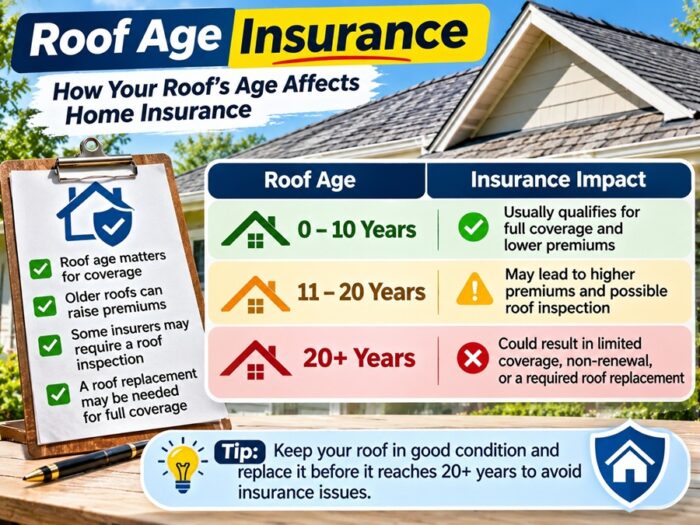
Roof age insurance language on your policy decides how much your carrier will really pay when wind tears shingles or a long leak stains the ceiling. If the age on file is older than the roof over your head, you can be pushed into worse coverage or a thin check right when you need real money.
What you need now is a clear way to find the age that sits in your paperwork, compare it to the real world, and fix it before the next storm hits. We are going to walk through where age hides on policies, which documents actually prove work dates, how roof permit records help, and what to do if the carrier drags its feet.
Why Roof Age Matters So Much To Insurers
Insurers care about age because older shingles fail more often and need more repairs. A ten year old architectural roof looks very different in their model than a two year old impact rated system, even if both look fine from your driveway.
Most home policies now tie coverage type and deductible rules to the age they keep on file, and guides like Homeowners Insurance Cover Hail Damage to Your Roof show how a single wrong year can flip you from replacement cost to actual cash value during a quiet renewal.
How Roof Age Shows Up On Your Policy
Your first job is to find where the document actually stores roof information. On many policies the declarations page lists roof type, material and the year of the last major update, but some carriers tuck those fields into a separate underwriting or inspection report that you only see if you ask for it.
Look for any field that mentions year built or year of last roof update, and if you see notes about stricter regional rules, references like california home insurance roof age are there because age rules change by state. If you still cannot find a clear date, call your agent, ask them to read the roof year on file, then write down who you spoke with and when.
Common Roof Age Insurance Data Sources
Most carriers are not sending inspectors up your ladder anymore. They pull age from past applications, old inspection photos, aerial imagery or third party property databases, and those sources are often wrong or out of date.
Problems start when an old listing or an auto filled data feed says the roof is twenty years old while your deck and shingles were replaced eight years ago. The number that drives your claim can drift far from reality and sit there untouched for a decade.
Typical Errors That Cost Homeowners Money
The big pattern we see is a roof age that defaults to the original year built of the house, even after a full replacement. That one lazy entry quietly moves many homeowners from full replacement coverage to actual cash value without anyone spelling it out in plain language.
Another regular headache is partial work being treated as a full new roof, like a contractor recovering over old layers instead of tearing everything off. That can blow up later when strict hail damage roof insurance rules push adjusters to inspect every layer and ask hard questions about what was really replaced.
How To Check The Real Age Of Your Roof
The most reliable way to confirm age is to track down paperwork from whoever installed or last replaced the system. A paid invoice, contractor proposal or completion certificate that lists dates and materials carries far more weight than a quick text message or a scribbled note on the fridge.
For anyone asking how old is my roof with no clean folder handy, start by scanning bank or credit card statements for large payments to roofing companies. Then cross check those dates with any old inspection reports or real estate listings that mention a new roof or recent replacement so you can narrow the year.
Why Roof Permit Records Matter
In many counties a full tear off and replacement must be permitted, so official records can back up your claim about when the work was done and who did it. County or city building departments often keep those details in an online portal where you can search your address, then download the history as a simple PDF and save it with your other house records.
If your town does not have an online system, call or visit the building office and ask for printed roof permit records. Those usually show the date the permit was issued and often when it was closed after a final inspection.
Using Photos And Home Inspection Reports
Clear dated photos will not replace invoices, but they support your version of events. A set of inspection pictures that show fresh shingles three years ago is hard for a carrier to ignore when someone in another office wants to tag the roof as much older.
Old home inspection reports from when you bought the property are especially useful, since inspectors often note the approximate age and visible condition. That kind of third party document fills gaps when other paperwork is thin and keeps you from leaning only on what you remember.
How To Prove Roof Age To Your Insurer
If you need to show an insurer that their file is wrong, gather everything that points to the true date before you start arguing. That usually means contractor invoices, permits, photos, inspection reports and any past emails with your agent about the replacement or major repairs.
Once you have a small packet, send it in writing to your agent or an underwriting contact and say clearly that you are asking them to correct the recorded roof year. Inside a carrier anyone talking about how to prove roof age really wants dated documents they would feel safe handing to an auditor years from now.
What To Do Before You File A Claim
Before you open a claim for storm damage, check that the age on the policy matches your evidence. If it does not match, push to correct it first or at least get the mismatch noted so you are not fighting over basics while someone is setting buckets under a ceiling leak.
A quick read of a step guide like File a Roof Insurance Claim After a Storm (Step-by-Step) helps you line up photos, temporary repairs and written estimates before the adjuster drives up. You will have your story straight and your dates in one place.
How Roof Age Affects Coverage And Deductibles
Roof age for home insurance purposes often decides whether you get replacement cost or actual cash value on a loss. Once a roof crosses the cutoff a carrier sets, they usually reduce payouts for wear and tear on every slope, even if only one side took the hit.
Many companies also use separate wind or hail deductibles that change with age. If the policy says the deductible jumps when the roof passes a certain year, your check after a large wind loss can shrink a lot even when the rest of the claim looks clean and well documented.
Common Cutoffs Insurers Use
Carriers use different age brackets, but twelve to fifteen years is a common line where they start trimming coverage. Older three tab shingles usually get treated more harshly than younger architectural or metal products because they wear faster and blow off more easily under repeat storms.
So the shorter the remaining useful life in their model, the more they will argue for wear and tear and the less room you have to push back on each round of depreciation on the estimate.
Fixing Roof Age Errors Before They Hurt You
Once you spot a wrong age on your paperwork, do not wait for the next hail season to fix it. Errors are far easier to correct during normal underwriting than under the heat of an active claim review with a tarp on the house.
Start with a short written request to your agent, attach copies of all supporting documents and ask them to confirm in writing when the change is made. If they refuse to correct obvious records or a carrier still underpays based on bad numbers, guides like Insurance Denied Your Roof Claim walk through options for disputes and second reviews when a claim stalls.
When To Get A Roofer Or Public Adjuster Involved
Professional help makes sense when there is a real disagreement about condition or remaining life, not a simple typo in a field. A roofer can write a condition report and estimate that backs up your claim that the system is younger and in better shape than the file shows.
If the fight shifts to coverage language or exclusions instead of simple date facts, some homeowners call a public adjuster or an attorney who works with property policies regularly. Because their fees and percentages vary a lot, you should ask careful questions about costs and scope before you sign anything with any helper.
Conclusion
Getting the roof age insurance entry right on your policy is a quiet job that decides how hard the next big claim will be. When the age in the file matches the real roof on your house, most of the conversation can stay on damage and repairs instead of basic facts that should have been fixed years ago. If you’d like help with this, reach out through our Contact Us page.
If you suspect the age is wrong, start gathering proof now, ask your agent to correct the record and keep your own folder of permits, photos and invoices so you are not hunting later in a storm. When the next system rolls through you will be glad you treated that one line in the policy as seriously as Roofing Cop does every single day.
Frequently Asked Questions
Q1. How can I tell how old my roof is if I bought the house used?
Ans. Start by checking your closing documents and any inspection reports from the purchase, because inspectors often estimate roof age. Then look through email or paper files for past contractor invoices or notes from the previous owner. County permit offices may also have records of a replacement. If you still cannot pin it down, ask a local roofer to give a written opinion based on materials and wear.
Q2. Do I have to tell my insurer when I replace my roof?
Ans. You should always tell your insurer when you replace a roof, even if the policy does not spell it out clearly. A new system can qualify you for better coverage and sometimes a lower premium. It also avoids problems later if the carrier is still using the old age. Send the update in writing and keep a copy of what you provided.
Q3. Will my home insurance drop me if my roof is too old?
Ans. Some insurers non renew policies when roofs pass a certain age or show heavy wear, especially in storm prone states. Others keep the policy but downgrade coverage to actual cash value instead of full replacement. If you receive a warning letter about age, talk to local agents about your options before the non renewal date. In many markets another carrier will still write the risk once repairs or replacement are planned.
Q4. Can I change insurers if they will not correct my roof age?
Ans. You can shop for a new insurer at any time, but it is better to fix obvious errors with the current company first if you can. When you get quotes from other carriers, be upfront about when the roof was replaced and have documents ready to back it up. That reduces the chance of another bad data entry following you. Make sure any new policy shows the correct information on the declarations before you cancel the old one.
Q5. What documents are strongest when I need to prove roof age?
Ans. Paid invoices from a licensed roofing contractor and closed building permits usually carry the most weight. Home inspection reports, clear dated photos and emails about the project support those core documents. Organize everything in one folder so you can send a clean packet when a carrier asks. The goal is to make the real age easy for anyone reviewing your file to see.
Q6. Does a second layer of shingles count as a new roof to my insurer?
Ans. Many insurers treat a recover job differently from a full tear off, because the old materials are still present underneath. Some will date the roof based on the new layer, while others look at the age of the whole system. If your roof was recovered, ask your agent how their company classifies it and get the answer in writing. That way you know what to expect before a large claim comes up.