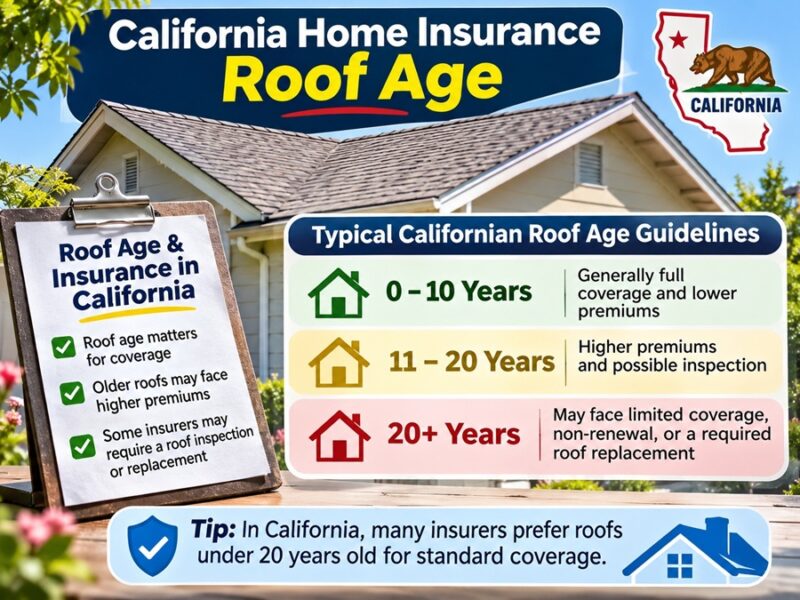
California home insurance roof age rules start to matter the day your carrier decides your shingles are too old, too worn or only worth a partial payout. Insurers across the state have tightened their roof guidelines, so owners with 10 to 25 year old roofs are seeing more inspections, more questions and more limits on what the policy will actually pay.
If you are trying to keep coverage, avoid a surprise ACV downgrade or prepare to move carriers, you need a clear view of how age, condition and paperwork fit together. We will walk through how roof age really affects your policy, what non renewal risk looks like, what ACV means in practice, how inspections and reports come into play, and what to gather before you talk to an agent or roofer about coverage decisions that can affect you for years. We wrote a separate piece on file a Roof Insurance Claim after a storm (Step-by-Step), and it pairs well with this step.
How Roof Age Actually Changes Your Coverage
Most owners do not hear a word about roof age until an inspection, a claim or a renewal notice flags a problem. Insurers care because the older the roof, the higher the odds of leaks or storm damage and the more they may have to pay if coverage still sits on full replacement cost.
Instead of a single statewide rule, companies use their own internal guidelines that can be stricter than building codes or lender rules. You might see your policy switch from replacement cost to ACV on the roof, a separate higher deductible for wind or hail, or a notice that the policy will not renew unless the roof is repaired or replaced. If your last claim was weather related, spending a few minutes with the guides under hail damage roof insurance will show you how carriers line up roof age, storm damage and actual payouts.
Typical Roof Age Limits In California Policies
Every carrier writes its own internal rules, but there are patterns in how they treat older roofs in the state. Many companies draw a quiet line by material, which is why agents talk about a california insurance roof age limit for 3 tab shingles and tile, even though it is not a formal law.
One insurer might refuse a new customer with a 20 year old 3 tab shingle roof, while another might accept the home but only cover the roof at ACV. Underwriters also care about how the roof looks right now, so a sound 22 year old tile roof with good flashing can be easier to insure than a 14 year old shingle roof with curling edges and patchy repairs. If you are not sure what an adjuster will focus on, the guide on Hail Damage on a Roof can help you look at your own home the way an inspector does.
Non Renewal Risk With Older Roofs
An insurance non-renewal old roof california letter usually lands after an exterior inspection from the carrier, a vendor or a past claim file review. The notice often names roof condition or age, gives a short deadline and offers the chance to submit proof of repairs or replacement for a second look.
The harder problem is that an aging roof can push you into a smaller pool of companies that are willing to write or keep the policy at all. Lenders expect continuous coverage on homes with a mortgage, so a cancelled or non renewed policy can push you into expensive force placed insurance if you do nothing. If your notice mentions old storm damage, the recent post titled Homeowners Insurance Cover Hail Damage to Your Roof shows how past hail, roof age and deductibles combine to decide what gets paid.
Replacement Cost, ACV Terms And Older Roofs
When a policy changes your roof coverage to ACV only, the company pays based on the roof’s depreciated value instead of what it costs to put on a new one. On an older roof that gap can be so wide that the check barely dents a full replacement.
Policies that keep replacement cost on the dwelling often carve out a separate ACV rule for roofs once they hit an internal age trigger. You might also see a separate wind or hail deductible or a special endorsement for certain materials that the carrier sees as higher risk. If a storm claim on your roof has already been denied or cut down, the guide titled Insurance Denied Your Roof Claim walks through practical next moves, like asking for reinspections or bringing in an independent roofer.
Inspections, Reports And Roof Age Rules
Insurers push more inspections as roofs age, which is why roof inspection for insurance california shows up so often in letters and emails. When an underwriter wants more detail, they are usually looking for specific facts such as material, remaining life estimate, active leaks, soft spots, patchwork and photos from several angles.
If you are already dealing with a storm issue, a targeted hail damage roof inspection can clarify what kind of loss you have and what may or may not fall under coverage. For general condition checks, some owners start by pulling recent bids or repair invoices and then decide whether a fresh inspection is worth the time based on how much it could avoid future disputes. When you do price out an inspection, the guide on roof inspection cost gives a clear look at typical ranges and what is usually included.
Roof Certification, Documents And Timing Your Next Steps
Roof Certifications And Reconsidering ACV
Some companies will look again at non renewal or ACV limits if you can provide a recent roof certification for insurance from a qualified roofer or inspector. Other carriers accept a full written inspection that states remaining life, materials and any urgent repair items, as long as photos and license details come with the report.
For any certification or report, keep copies of what was recommended and what you actually did. If a later claim brings up prior condition, having that paper trail is often the difference between a fast adjustment and a long argument over what the roof looked like last year.
Documents To Gather Before You Call
The first place to look is your current declarations and endorsements, where roof specific rules are often tucked into small print. Search for words like ACV, roof, wind, hail and cosmetic damage so you know which limits already apply and where your california home insurance roof age issue might show up.
Before you call your agent, pull together a small packet of documents so you are not hunting for proof later. Useful items include invoices from your last major repair or reroof, photos that clearly show the roof from the street and from upper windows, past inspection reports and any written bid that spells out materials and scope. If you want a pro to look everything over with insurance in mind, the contact page under Contact Us is where you can line up that conversation.
Deciding When A New Inspection Makes Sense
Once you know what your policy says and what documents you have, you can decide whether a new inspection is worth ordering now or if it can wait. Not every roof needs a fresh report the moment it crosses an internal age line, but some situations justify paying for one on your own.
If an underwriter is asking for more detail, if you plan to refinance or if you are worried about hidden damage, an independent report can be worth the cost in avoided surprises. Price is usually the sticking point, so look at typical Roof Inspection Cost ranges and weigh that against what one uncovered leak or cancelled policy might cost.
Conclusion
Keeping coverage with an older roof in California comes down to knowing where your insurer draws the line and having proof of condition ready. When you understand ACV terms, inspection rules and how california home insurance roof age guidelines are actually used behind the scenes, you stand a better chance of avoiding a thin claim check or a non renewal letter.
If your roof is creeping toward your carrier’s age cutoff or recent quotes already hint at stricter terms, this is the time to read your policy, pull your records and talk with both your agent and a qualified roofer from Roofing Cop about your next repair or replacement plan.
Frequently Asked Questions
Q1. How old can a roof be for homeowners insurance in California
Ans. There is no single statewide rule on roof age because each insurer sets its own guidelines by material and risk tolerance. Many companies become stricter once asphalt shingle roofs reach the middle teen years, while tile and metal can often go longer if they are in good condition. The only way to know your limit is to confirm the current underwriting rules for your specific carrier and roof type.
Q2. Can my insurance company non renew me because of an old roof
Ans. Insurers can decide not to renew a policy when they consider the roof too old or too worn for their current appetite. They usually base that decision on exterior inspections, photos and any open or past claims on the home. If you receive a non renewal notice, you can sometimes keep coverage by repairing or replacing the roof and providing updated documentation before the deadline.
Q3. What does ACV roof coverage mean on my policy
Ans. ACV roof coverage means the company will pay the depreciated value of your roof instead of the full cost to replace it with new materials. The older the roof, the more depreciation they apply, so your payout might only cover a fraction of a replacement. It is important to know whether only the roof is on ACV terms or the whole dwelling structure because that affects how you plan for potential repairs.
Q4. Is a roof inspection required for home insurance in California
Ans. Some carriers require a roof inspection for new policies or for renewals once a roof reaches a certain age or after a claim. Others rely on drive by photos or internal data instead of a formal inspection. If an inspection is requested, the company will usually tell you what kind of report they want and how recent it must be.
Q5. What documents should I gather before talking to my insurer about roof age
Ans. You should collect invoices from past roof work, photos that clearly show the roof and any previous inspection or certification reports. Having your policy declarations page and any endorsements handy also makes conversations with your agent more precise. With those documents ready, you can answer most of the underwriter’s questions without delay.
Q6. Can a roof certification help me keep my home insurance
Ans. In some cases a recent roof certification from a qualified professional can persuade an insurer to keep or adjust coverage on an older roof. The report usually needs to spell out remaining life, current condition and any repairs made. Each carrier decides whether they will accept a certification, so it is best to confirm what they need before you order one.