So you built a pergola, or you’re about to, and now you’re staring up at that open frame wondering how to actually make it usable on a rainy afternoon or a blazing July day. You’re not alone. This is one of the most common questions we get at Roofing Cop, and honestly, most articles online just try to sell you one specific panel instead of helping you figure out what actually fits your backyard, your budget, and your climate.
This guide breaks down every major pergola roofing option, what it actually costs, how long it lasts, and which one makes sense for where you live. No sales pitch, just the real comparison you were looking for.
Quick Answer
The best pergola roofing material depends on your climate and budget. Polycarbonate panels are the top overall pick for most homeowners because they’re affordable ($400 to $900 for a 10×10 ft roof), block UV rays, let natural light through, and are DIY friendly. For heavy snow or storm areas, choose metal roofing for maximum durability. For mild climates on a tight budget, a fabric or retractable canopy works well. Wood lattice and glass are better suited to looks and budget over full weather protection.
Why Your Pergola Roof Material Actually Matters
A pergola without a roof is basically just a fancy trellis. The whole point of adding a roof cover is to control how much sun, rain, and wind actually reaches your patio furniture, your grill, or the kids playing underneath.
But here’s the thing most people get wrong: they pick a material based on looks alone, then regret it six months later when the fabric canopy rips in a storm or the wood lattice does nothing to keep rain off the dinner table. The right choice depends on three things: your local weather, how much shade versus light you actually want, and how much you’re willing to spend. If you want the bigger picture on roofing materials beyond just pergolas, our guide on best roofing materials for residential homes covers how these same principles apply to your main roof too.
Types of Pergola Roofing Materials
1. Polycarbonate Panels
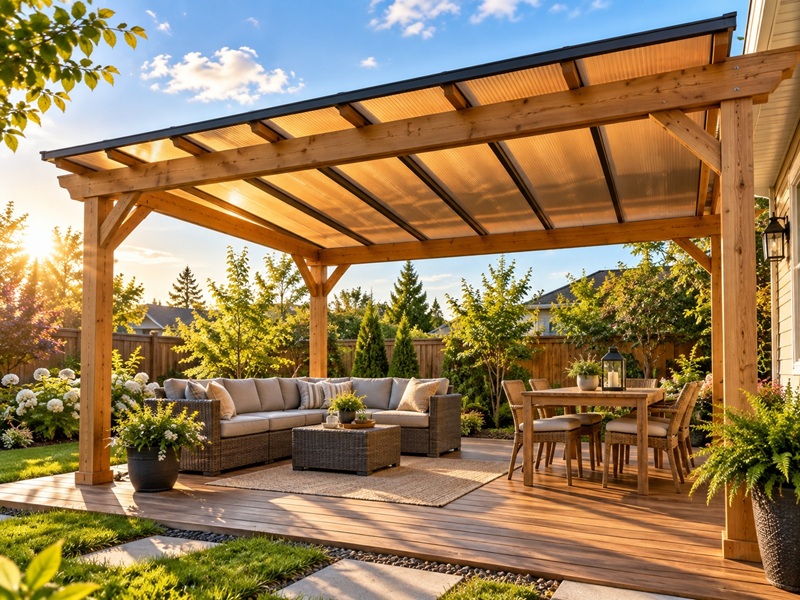
Polycarbonate is probably the most popular pergola roof material right now, and for good reason. It’s a lightweight plastic sheeting, usually multiwall or twinwall, that lets light through while blocking most UV rays.
What it’s good for: Homeowners who want natural light without the heat and glare of an open roof. Panels typically block 99% of UV rays while still transmitting somewhere between 25% and 80% of visible light, depending on the color and thickness you choose. Bronze and tinted panels cut glare more; clear panels let in more brightness.
Real example: A family in Phoenix with a south-facing pergola went with 10mm bronze twinwall polycarbonate panels specifically because clear panels turned their patio into a greenhouse by noon. The bronze tint cut the glare enough that they could actually sit outside in summer afternoons.
Downsides: Over 10 to 15 years, cheaper polycarbonate can yellow or become brittle if it doesn’t have UV coating on both sides. Always check whether the panel is UV protected on one side or two.
2. Metal or Aluminum Roofing
Standing seam metal panels or corrugated aluminum give you a fully solid, watertight roof. No light comes through at all, which some people want and some people don’t.
What it’s good for: Areas with heavy rain, hail, or snow load where you want zero leaks and maximum durability. Metal roofing on a pergola essentially turns it into a proper outdoor room.
Downsides: It’s heavier, so your pergola frame needs to be structurally rated for it. It also gets loud in heavy rain and can trap heat underneath in direct sun unless it’s insulated or vented properly.
3. Fabric and Shade Cloth Canopies
Retractable canopies or stretched shade sailcloth are the budget-friendly, flexible option. Some are motorized, some are manual pulley systems.
What it’s good for: People who want shade during the day but an open sky view at night, or who live somewhere with mild weather and don’t need full rain protection.
Real example: A homeowner in San Diego uses a retractable canvas canopy that she opens fully on cool evenings and closes for shade during midday heat. It works well because San Diego rarely gets heavy rain, which is the main weakness of fabric roofing.
Downsides: Fabric is not built for heavy rain or snow. Wind can also damage cheaper canopies if they’re not rated for gusts, and most fabric needs replacing every 3 to 7 years depending on sun exposure.
4. Wood Lattice or Slatted Roofing
This is the classic look, thin wood slats spaced apart to create dappled shade while still letting some light and rain through.
What it’s good for: Aesthetic-first homeowners who want a natural look and don’t mind getting a little rained on. It’s also popular for supporting climbing plants like wisteria or grapevines.
Downsides: It provides almost no rain protection and needs regular sealing or staining to prevent rot, especially in humid climates.
5. Glass Roofing
Tempered glass panels give a premium, modern look and full weather protection while keeping the space bright and open feeling.
What it’s good for: High-end outdoor living spaces where budget isn’t the main concern and you want a glass conservatory feel without the total cost of an enclosed sunroom.
Downsides: It’s the most expensive option by far, heavy enough to require serious structural support, and can get uncomfortably hot in direct sun without tinting.
6. Louvered or Bioclimatic Roofing
These are motorized aluminum louvers that open and close, letting you control airflow, light, and rain protection on demand.
What it’s good for: People who want one roof that adapts to different weather instead of committing to a single fixed material.
Downsides: This is the priciest and most complex option, often requiring professional installation and ongoing maintenance of the motorized parts.
Cost Comparison by Material
Pricing varies a lot by region and brand, but here’s a realistic range for a standard 10×10 foot pergola roof, materials only, not counting labor if you hire it out.
| Material | Approximate Cost (10×10 ft) | DIY Friendly |
|---|---|---|
| Polycarbonate panels | $400 to $900 | Yes |
| Fabric/shade canopy | $150 to $600 | Yes |
| Wood lattice | $200 to $500 | Yes |
| Metal/aluminum roofing | $800 to $2,000 | Moderate |
| Glass roofing | $2,500 to $6,000+ | No, professional install recommended |
| Louvered/bioclimatic | $3,000 to $8,000+ | No, professional install required |
At Roofing Cop, we usually tell homeowners on a tighter budget to start with polycarbonate. It hits the sweet spot of weather protection, DIY installability, and reasonable cost. For a deeper breakdown of trade offs by material, our pros and cons of different roofing materials comparison guide is a useful companion read before you commit.
Best Pergola Roofing by Climate
Your local weather should honestly be the biggest factor in your decision, more than looks.
Heavy snow regions: Go with metal roofing or thick multiwall polycarbonate (10mm or higher) rated for snow load. Fabric and thin polycarbonate can sag or collapse under snow weight.
Hurricane or high-wind zones: Standing seam polycarbonate or metal panels with proper fastening hold up best. Fabric canopies are risky here unless they’re specifically wind-rated and retractable so you can take them down before a storm.
Hot, sunny climates: Tinted or bronze polycarbonate cuts glare and heat while still letting light through. Louvered roofs also work great here since you can close them for full shade during peak sun.
Rainy, humid climates: Solid polycarbonate or metal roofing keeps water out completely. Wood lattice is a poor choice here since constant moisture speeds up rot.
DIY Pergola Roof Installation: The Basic Steps
Most polycarbonate and metal panel kits are designed for weekend installation without hiring a contractor. Here’s the general process most manufacturers, including the kits Roofing Cop recommends, follow.
- Measure your pergola frame precisely. Get the exact width and length between rafters before ordering panels, since a bad measurement means panels that don’t fit.
- Check your roof slope. Most polycarbonate systems need a minimum slope of around 5 percent so water actually drains instead of pooling.
- Install the side and end profiles first. These aluminum or plastic channels are what hold your panels in place and keep water out at the edges.
- Slide the panels into the profiles. Multiwall panels usually slot into standing seam or U-channel connectors rather than being screwed directly through the panel.
- Cap the ends. End caps keep dust, bugs, and moisture from getting into the hollow channels of multiwall panels.
- Seal and secure. Use the fasteners and tape included in your kit to lock everything down and prevent leaks at the seams.
If you’ve never installed roofing panels before, budget a full weekend and have a second person helping, since panels can be awkward to handle alone in any wind. If your setup involves metal, glass, or a louvered system, it’s usually worth hiring a pro instead of DIYing it. Our guide on where to find reputable roofing contractors in your area walks through how to vet someone properly before they touch your pergola.
Maintenance and Lifespan by Material
- Polycarbonate: Lasts 10 to 20 years with proper UV coating. Clean twice a year with mild soap and water, avoid abrasive cleaners that scratch the surface.
- Metal: Can last 30+ years with minimal maintenance, just check for rust at fastener points annually.
- Fabric: Typically needs replacing every 3 to 7 years depending on sun exposure and weather.
- Wood: Needs re-sealing or staining every 1 to 2 years to prevent rot and warping.
- Glass: Very long lasting, 25+ years, but needs regular cleaning to stay clear and occasional resealing of the frame joints.
- Louvered systems: Motors and moving parts typically need servicing every few years, panels themselves last decades.
Do You Need a Permit for a Pergola Roof?
This depends heavily on where you live, but here’s what generally triggers a permit requirement:
- Adding a solid roof cover to an existing open pergola in many cities counts as a structural change
- Anything attached to your home’s main structure often needs approval
- Electrical work for motorized louvers or lighting almost always requires a permit
The safest move is to check with your local building department before installing a solid roof, especially metal or glass, since these add real weight and can affect your homeowner’s insurance if done without approval. You can also check the International Code Council website for the base building codes most local jurisdictions adopt, which gives you a starting point before you call your local office. Roofing Cop always recommends this quick call before you buy materials, it can save you a costly redo later.
If you decide the job is bigger than a weekend DIY project, our complete hiring checklist and cost guide for roofing contractors walks you through vetting quotes, checking licenses, and avoiding the common pricing traps homeowners run into.
Frequently Asked Questions
Is polycarbonate roofing actually waterproof for pergolas?
Yes, when installed correctly with proper end caps and sealed seams, multiwall polycarbonate panels are fully waterproof. Most leaks happen because of poor installation, not the material itself.
Can I put a solid roof on my existing wooden pergola?
In most cases yes, but you need to confirm your existing posts and beams can handle the added weight, especially for metal or glass roofing. Lighter materials like polycarbonate are usually safe to add without reinforcing the structure.
What’s the cheapest way to cover a pergola?
A fabric shade canopy or simple wood lattice are the lowest cost options, typically under $500 for a standard size pergola. Just know they offer less weather protection than solid roofing.
How much light should I let through my pergola roof?
Most homeowners find 25% to 45% light transmission comfortable for seating areas, which is what bronze or lightly tinted polycarbonate panels typically provide. Clear panels near 80% transmission work better over plants that need more sunlight.
Does a pergola roof increase home value?
A well built, weatherproof pergola roof can add real value by extending usable outdoor living space, particularly in warmer climates where outdoor entertaining areas are in high demand.
Expert Tips From Roofing Cop
After years of fielding questions and helping homeowners avoid the same mistakes, here are the details that don’t usually make it into product manuals but matter a lot once your roof is actually up.
Don’t trust the “average” slope number.
A 5% minimum slope is a baseline, not a guarantee. If your pergola sits under trees that drop leaves or sap, bump the slope to 8-10% so debris doesn’t build up and cause pooling anyway.
Buy about 10% more panel than your measurement says you need.
Cutting polycarbonate on site always eats into your margin, and having a spare panel on hand saves a full reorder wait if one cracks during install.
Check which side has the UV coating before you install. Most single-sided UV panels look identical on both faces. Install it backward and the coated side ends up facing down, which means the panel yellows and goes brittle in under 3 years instead of lasting the rated 10 to 20.
Don’t skip the anti-dust tape at the open panel ends.
Skipping this step is the number one reason multiwall polycarbonate panels develop dark, grimy streaks inside the flutes within a year. It looks like a manufacturing defect, but it’s almost always a missed installation step.
Vent metal roofs in hot climates.
Without a small ridge vent or gap at the peak, trapped heat radiates down into the seating area, sometimes making the space hotter than having no roof at all.
Get hail impact ratings in writing if you’re in a hail-prone area.
Not all polycarbonate is rated equally. Thinner 4mm panels can crack in moderate hail, while 10mm multiwall panels usually hold up fine.
If you’re going with a retractable fabric canopy, spend extra on the pulley system.
Fabric canopies almost never fail because of the fabric itself, they fail at the pulley. A stainless steel or aluminum pulley kit is worth the upgrade over cheap plastic ones.
These are the kinds of details that separate a roof that lasts 15 years from one that needs replacing in 3, and it’s exactly the kind of practical, on-the-ground knowledge Roofing Cop likes to pass along.
Final Thoughts
There’s no single best pergola roofing material, only the best one for your specific backyard, budget, and weather. If you want flexibility and a good balance of cost and protection, polycarbonate is hard to beat. If you’re in a heavy snow or storm zone, metal is worth the extra cost. And if budget is tight, fabric or wood can still get the job done as long as you’re realistic about their limits.
Whatever you choose, measure twice, check your local permit rules, and don’t skip the slope requirement, it’s the difference between a roof that sheds water and one that pools it right over your head. That’s the kind of practical advice Roofing Cop believes in: less sales pitch, more straight answers so you can actually get your project done right.