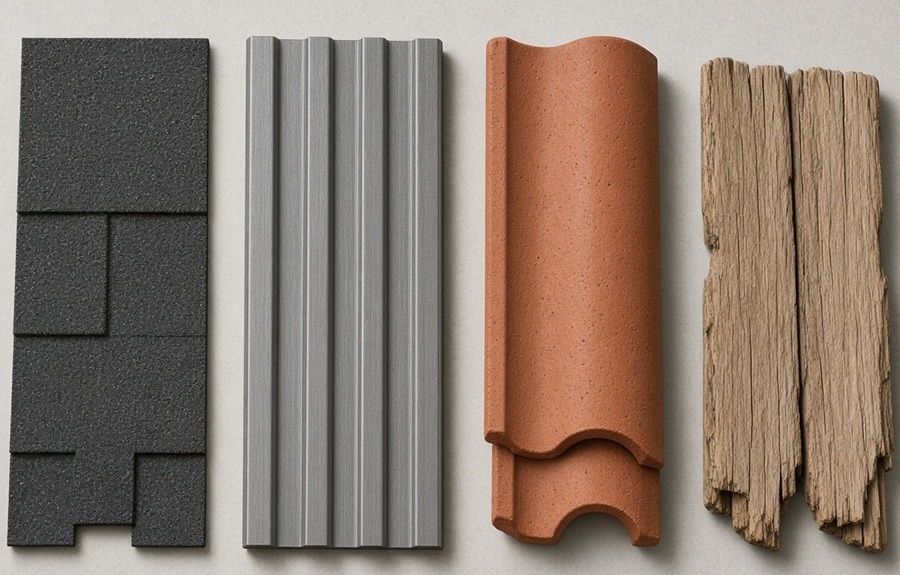
Quick answer: Asphalt shingles are the most affordable and popular option (15-30 year lifespan), metal roofing lasts 40-70 years but costs more upfront, clay and concrete tile suit hot climates but add weight, and slate offers the longest lifespan at a premium price. The right choice depends on your budget, climate, and how long you plan to stay in the home.
Picking a roofing material feels bigger than it should, mostly because every contractor seems to push a different option. The truth is, there’s no single “best” material. There’s only the best material for your roof pitch, your local weather, and your budget. Here’s an honest breakdown of what each option actually delivers, and where it falls short.
Asphalt Shingles
Asphalt shingles cover roughly 4 out of 5 homes in the US, and for good reason. They’re the default choice most roofing crews install without hesitation.
Pros:
- Lowest upfront cost of any material, usually $4-$7 per square foot installed
- Wide range of colors and styles, including architectural (dimensional) shingles that mimic wood or slate
- Easy to repair since most roofers stock replacement shingles
- Fast installation, typically one to two days for an average home
Cons:
- Shorter lifespan than most alternatives, around 15-30 years depending on quality
- Vulnerable to algae streaking in humid climates
- Can lift or crack in extreme wind or hail
A homeowner in Phoenix, for example, might see asphalt shingles wear out closer to the 15-year mark because of intense UV exposure, while the same shingles in a milder climate like Seattle could last closer to 25 years. Climate matters as much as the material itself.
If you’re comparing actual repair costs before committing to asphalt, Roofing Cop’s roof repair cost guide breaks down what typical patch jobs and full tear-offs run in different regions.
Metal Roofing
Metal roofing has moved past its old “barn roof” image. Standing seam metal panels are now common on modern residential homes too.
Pros:
- Long lifespan, typically 40-70 years depending on the metal type
- Reflects heat, which can lower cooling costs in hot climates
- Resistant to fire, rot, and insect damage
- Sheds snow and rain quickly, reducing ice dam risk
Cons:
- Higher upfront cost, often $9-$14 per square foot installed
- Can be noisier during heavy rain without proper insulation underneath
- Requires a specialized installer, not every roofing crew works with metal
- Dents are possible from large hail, though most residential-grade metal resists minor impacts
According to the National Roofing Contractors Association, metal roofing has become one of the fastest-growing categories in residential reroofing, largely because of its durability and lower long-term maintenance needs compared to asphalt.
Clay and Concrete Tile
Tile roofing is common across the Southwest and parts of Florida, where the Spanish and Mediterranean architectural style is popular.
Pros:
- Extremely durable, often lasting 50 years or more
- Naturally fire-resistant
- Performs well in hot, dry climates and coastal humidity
- Distinctive appearance that holds resale value in the right markets
Cons:
- Heavy, meaning your roof structure may need reinforcement before installation
- Individual tiles can crack from foot traffic or falling branches
- Higher installation cost, often $10-$18 per square foot
- Not ideal for regions with frequent freeze-thaw cycles, since moisture trapped in cracked tiles can expand and worsen damage
Before choosing tile, it’s worth having a structural assessment done, since not every roof deck was built to carry the extra weight without modification.
Wood Shingles and Shakes
Wood roofing gives homes a rustic, natural look that some homeowners specifically request for historic or cabin-style properties.
Pros:
- Natural insulating properties that can help regulate attic temperature
- Distinctive, textured appearance that ages into an attractive weathered look
- Biodegradable and often sourced from renewable cedar or redwood
Cons:
- Higher maintenance than most materials, including periodic treatment against moisture and insects
- Shorter lifespan in wet climates, sometimes 20-25 years
- Some local building codes and insurance companies restrict wood roofing due to fire risk
- Costs more than asphalt, generally $8-$14 per square foot
If you’re set on the wood look but worried about fire codes or maintenance, ask your contractor about fire-treated wood shakes or synthetic alternatives that replicate the same appearance with fewer downsides.
Slate Roofing
Slate is the roofing material other materials try to imitate, and it comes with a price tag to match.
Pros:
- Longest lifespan of any common roofing material, often 75-100+ years
- Naturally fire-resistant and low maintenance once installed
- Timeless appearance that suits historic and high-end homes
Cons:
- Highest cost among standard materials, frequently $15-$30+ per square foot
- Very heavy, almost always requiring structural reinforcement
- Difficult to repair, since matching original slate tiles can be tricky decades later
- Installation requires specialized, experienced crews, which limits your contractor options
Slate makes the most sense if you’re planning to stay in the home long-term or if you’re restoring a historic property where the material is part of the home’s character.
Synthetic and Composite Roofing
Synthetic roofing materials, often made from recycled rubber, plastic, or polymer blends, are designed to mimic the look of slate or wood at a lower cost and weight.
Pros:
- Lighter than natural slate or tile, often without needing structural reinforcement
- Impact-resistant, which can help in hail-prone regions
- Lifespan often in the 40-50 year range
- Lower maintenance than real wood or clay
Cons:
- Higher cost than asphalt, though usually less than natural slate or tile
- Product quality varies significantly between manufacturers, so warranty terms matter
- Still a relatively newer category, so long-term performance data is less extensive than materials like asphalt or metal
How to Decide Which Material Is Right for You
Rather than picking based on price alone, walk through these three questions:
- How long do you plan to stay in the home? If it’s under 10 years, asphalt or synthetic materials usually make more financial sense than a 50-year slate roof you won’t be around to enjoy fully.
- What does your climate demand? Coastal and hurricane-prone areas benefit from metal or impact-resistant synthetic materials, while dry, hot climates suit clay or concrete tile well.
- Can your roof structure handle the weight? Heavier materials like slate and tile often require a structural evaluation before installation, which adds cost most homeowners don’t budget for upfront.
Getting a real cost comparison based on your actual roof size and region helps more than generic online estimates. Roofing Cop‘s roofing cost guide breaks down pricing by material type so you can compare options side by side before calling a contractor.
Energy Efficiency Considerations
Material choice also affects your energy bills. Reflective metal roofs and light-colored tile can lower attic temperatures significantly compared to dark asphalt shingles. The ENERGY STAR program maintains a list of roofing products that meet reflectivity standards, which is worth checking if lowering cooling costs is a priority for you.
Frequently Asked Questions
What is the most durable roofing material?
Slate has the longest average lifespan, often exceeding 75-100 years, followed by metal roofing at 40-70 years. Durability also depends on proper installation and climate conditions.
What roofing material is the cheapest?
Asphalt shingles are the least expensive option to install, typically ranging from $4-$7 per square foot, making them the most common choice for budget-conscious homeowners.
Is metal roofing worth the higher cost?
For most homeowners planning to stay long-term, yes. The 40-70 year lifespan and lower maintenance needs often offset the higher upfront cost compared to replacing asphalt shingles two or three times over the same period.
Which roofing material is best for hot climates?
Clay and concrete tile perform well in hot, dry regions due to their natural heat resistance, while reflective metal roofing also helps reduce cooling costs in warm climates.
How do I find a contractor experienced with a specific roofing material?
Not every roofing crew works with every material, especially slate, tile, or standing seam metal. Roofing Cop’s guide on finding reputable roofing contractors walks through how to verify a contractor’s experience with your chosen material before hiring.
Bottom Line
There’s no universally “best” roofing material, only the best fit for your budget, climate, and how long you’re planning to stay in your home. Asphalt remains the practical default for most homeowners, while metal, tile, and slate reward the higher upfront investment with decades of extra lifespan. Whatever material you choose, working with a contractor who has direct experience installing it matters just as much as the material itself.