If you noticed a small brown stain on your ceiling last monsoon and thought “it’s minor, it’ll dry out,” this guide is for you. A shingle repair that costs a few hundred rupees today can turn into a full ceiling repair costing thousands next year if it’s ignored. Below you’ll find real cost ranges, how to find a contractor you can actually trust, and the exact steps to take during an emergency.
Expert Tip: “After 15 years in the roofing industry, I’ve seen this pattern over and over: homeowners who pick the lowest quote end up paying for the same repair again within 2-3 years. What actually matters isn’t the price, it’s the written scope of work that lists every material and inclusion clearly. If a contractor only gives you a verbal quote and won’t put the scope in writing, walk away.” Roofing Industry Expert Insight
Roof Repair Near Me: Quick Overview
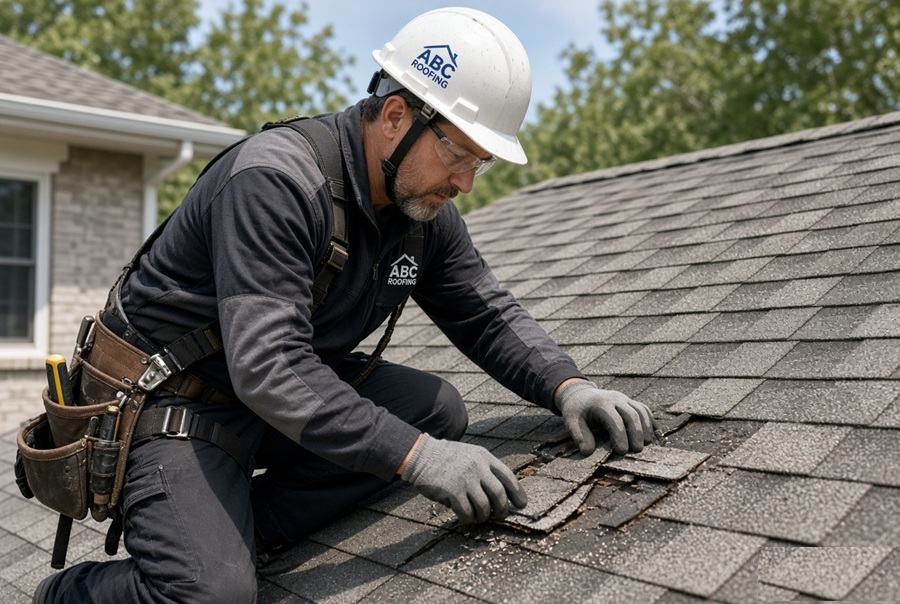
When people search for roof repair near me, they’re usually dealing with damaged shingles, active leaks, or flashing (the metal seal around chimneys and vents). A small job, like replacing two or three shingles, gets done in 2 to 3 hours. A leak that needs proper diagnosis can take a full day.
Warning Signs You Shouldn’t Ignore
These signs are never harmless, and ignoring them is the most expensive mistake homeowners make:
- Water stains on the ceiling: One homeowner in Bangalore noticed a coin-sized stain that spread across an entire wall in three months because the source was never fixed.
- Missing or curled shingles: Check your roof right after any storm; this is usually the first visible sign of damage.
- Granules collecting in the gutter: This means the shingles are wearing down and replacement is getting closer.
- Daylight visible from the attic: This means there’s a gap large enough for water to get through directly.
Repair or Replacement: How to Decide
| Factor | Repair | Replacement |
|---|---|---|
| Extent of damage | Limited to 1-2 spots | Spread across the roof |
| Roof age | Under 15 years | Over 20 years |
| Cost | Lower, one-time fix | Higher, but saves money long-term |
| Time required | A few hours to 1 day | 1-3 days |
| Best fit | One leak after a storm | Repeated leaks, aging roof |
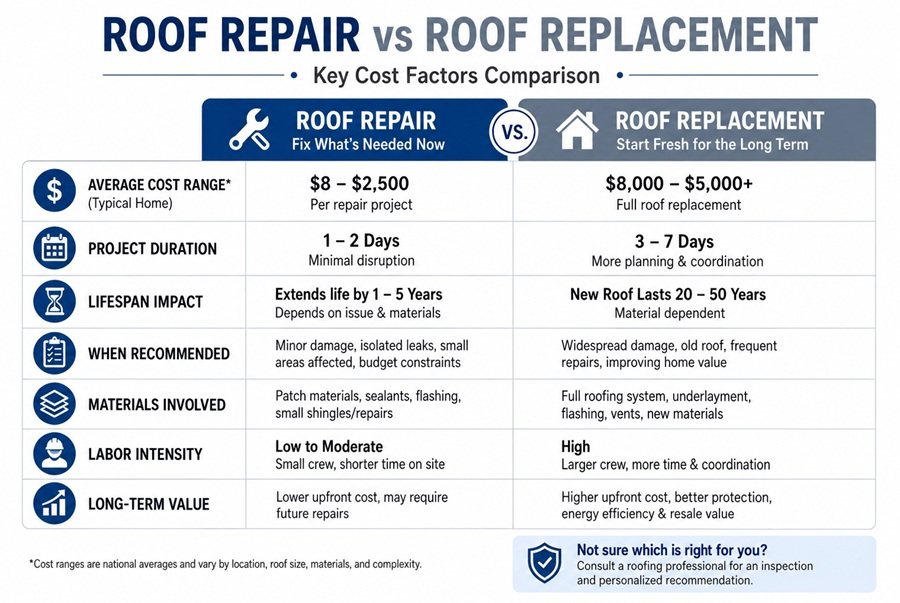
Example: If a roof built in 2010 has a leak in just one spot, a repair is enough. But if three or four areas are leaking at once and the roof is 18+ years old, replacement usually makes more sense, since repeated repair costs add up to nearly the same price anyway. If your roof is nearing that stage, it’s worth comparing repair costs against the full cost of a new roof before you decide.
Key Takeaways at a Glance
| Point | Takeaway |
|---|---|
| First step, always | Verify license and insurance before discussing price |
| Repair vs Replace | Repair is enough if the roof is under 15 years old and damage is limited to 1-2 spots |
| Most expensive mistake | Ignoring a small leak, since it turns into a structural problem within months |
| During an emergency | Safety first, then a temporary fix (bucket or tarp), then call a licensed roofer |
| How to avoid hidden costs | Ask for the per-sheet rate on rotten decking before hiring |
| DIY limit | Loose shingles or gutter cleaning are fine to DIY; flashing and structural work always need a professional |
How Much Does Roof Repair Cost?
Cost depends mainly on three things: how much damage there is, how steep the roof is, and what material it’s made of. A single shingle repair costs very little, while flashing replacement or structural work can cost several times more.
Why Pricing Varies So Much
- Roof pitch (steepness): A steep roof requires safety harnesses and extra crew, which pushes up labor costs.
- Where the damage is: A leak near a chimney or vent is usually more expensive because flashing needs to be replaced, not just a shingle.
- Material: Asphalt shingle repair is the cheapest option; tile or metal roofing repairs cost more.
- Weather damage: After a hailstorm, dozens of homes need repairs at once, so rates in the area often rise during that period.
- Emergency calls: A contractor called at 11 pm or on a weekend usually charges a premium, since it disrupts their regular schedule.
Typical Cost Range
| Repair Type | Cost Level |
|---|---|
| Replacing a few shingles | Lowest |
| Flashing repair (chimney/vent) | Medium |
| Finding and fixing a leak source | Medium |
| Post-hailstorm damage | Medium to high |
| Emergency night/weekend call | Highest |
The exact number will vary by region and roof size, so this is only a guide. Getting quotes from two or three contractors is always better than accepting the first price you’re given.
Need a repair estimate today? Get free quotes from licensed roofers near you, no obligation, response within 24 hours.
How to Find a Trustworthy Roof Repair Contractor
When comparing local roof repair services, licensing and insurance should be your first filter, before price even enters the conversation. After that, read genuine reviews and try to get a referral if you can, since a job someone has actually seen done at a neighbor’s house is more reliable than any online review.
Verify Licensing and Insurance
- Confirm the roofing license is active
- Ask for an insurance certificate, and call the insurance company yourself to verify the policy is live
- If the contractor holds a manufacturer certification (like GAF) or is listed with the National Roofing Contractors Association, that’s an extra sign of credibility
Don’t Judge Reviews by Star Rating Alone
A five-star rating alone doesn’t tell you much. Read 8 to 10 reviews and look for:
- Whether the crew showed up on time
- Whether the site was left clean or littered with nails and debris
- Whether communication was clear or required constant follow-up
One pattern that shows up often: contractors who openly share photos or addresses of recent local jobs tend to be more reliable, simply because they have nothing to hide.
The Value of a Referral
Ask a neighbor, coworker, or real estate agent if they’ve recently hired someone. Real estate agents are especially useful here, since a bad roof repair can derail a home sale, so they usually keep a list of contractors they trust.
For a deeper look at vetting contractors the right way, see our guide on creating a trustworthy roofing experience.
Questions to Ask Before Hiring a Contractor
Finding the best roofing contractor near me comes down to asking the right questions before you sign anything. These few questions take five minutes to ask but reveal an unreliable contractor almost immediately.
Insurance and Warranty Questions:
- “Can I get your current insurance certificate?” (then verify it yourself by calling)
- “How long is your workmanship warranty?” (this is separate from the materials warranty, and should ideally run 2 to 10 years)
- “Do you use subcontractors? If so, are they licensed too?”
Scope and Pricing Questions:
- “Can you give me a written quote that lists every material and inclusion?”
- “If you find rotten decking, what’s your per-sheet rate?” (this is a common hidden cost)
- “Will there be an on-site project manager I can speak to directly?”
- “How will you protect my landscaping and driveway during the work?”
Trust the contractor who answers these clearly and specifically. If someone gives a vague answer or just says “don’t worry, it’ll be fine” without details, that’s a sign to look elsewhere.
Emergency Roof Repair: What to Do Right Away

After a storm, the first priority is stopping further water damage, and only then calling a licensed emergency roof repair near me service. Waiting won’t make the roof damage worse, but it will make the interior damage worse.
Before the Contractor Arrives
- If it’s safe to do so, cover the exposed area with a tarp; if it isn’t safe, skip this and focus on the steps below instead
- Place a bucket under the leak to protect the floor and furniture
- Move furniture and electronics away from the affected area
- Never try to climb onto the roof yourself; this is one of the leading causes of injury during storm cleanup
When to Call for Emergency Service
- A leak that’s actively spreading inside the house
- Visible sagging or a section of the roof structure caving in
- A large section of roofing missing after a storm
- Water near electrical wiring; this is a serious hazard, so switch off the power first
DIY Roof Repair vs Hiring a Professional
Small issues like a loose shingle here or there can be handled yourself, but anything structural or safety-related should always go to a licensed roofer. A poor DIY attempt can turn a small leak into a major structural problem, which ends up costing more than the original repair would have.
What You Can Handle Yourself
- Re-securing one or two loose shingles
- Cleaning the gutter to prevent water blockage
- Caulking small gaps
What Should Always Go to a Professional
- Flashing replacement (around chimneys and vents, since this is tricky, leak-prone work)
- Sagging roof deck or any structural issue
- Major damage after a storm or hailstorm
- Any leak without a clear source, since patching the wrong spot wastes both time and money
Improper repairs can also affect your coverage; the Insurance Information Institute notes that unlicensed or undocumented repair work is a common reason homeowner claims get denied.
FAQ
Q1. How much does roof repair near me cost?
Cost depends on the size of the damage, the roof’s pitch, and the material. A small shingle repair is the cheapest option, while flashing or emergency repairs cost more. Get quotes from two or three local contractors for an accurate number.
Q2. How do I find a reliable roofer?
Start by verifying license and insurance, then read multiple reviews, and get a referral from a neighbor or real estate agent if possible. These three steps significantly reduce the risk of hiring the wrong contractor.
Q3. What should I ask a contractor before hiring them?
Ask for the insurance certificate, the length of the workmanship warranty, and a written scope of work. These questions protect you from hidden costs and miscommunication later.
Q4. Should I repair my roof or replace it?
If the damage is limited to one or two spots and the roof is under 15 years old, a repair is enough. If the roof is over 20 years old or keeps developing new leaks, replacement is usually cheaper in the long run.
Q5. Can a handyman repair my roof, or do I need a licensed roofer?
A handyman can handle small jobs like a missing shingle or gutter cleaning. But for flashing, structural work, or major leaks, hire a licensed roofer, since improper repairs can even get an insurance claim rejected.
Q6. How long does a roof repair take?
A small repair, like replacing one or two shingles, takes 2 to 3 hours. If the leak source needs to be tracked down first, it can take a full day. Major storm damage can stretch to 1-2 days depending on severity and weather conditions.
Q7. Does insurance cover roof repair?
Most home insurance policies cover sudden damage from storms or hail, but not normal wear and tear. To get a claim approved, the repair usually needs to be done by a licensed contractor, since unlicensed work is a common reason claims get denied.
Q8. What’s the best season for roof repair?
Dry, moderate weather (outside of monsoon and peak winter) is ideal, since materials seal properly in those conditions. But if you have an active leak, don’t wait for the right season; delaying it only lets the interior damage get worse.
Q9. Can I buy the materials and repair my roof myself?
Small jobs like re-securing a loose shingle or minor caulking are fine to DIY if you have proper safety equipment. But flashing, structural work, or a leak with no clear source should go to a licensed roofer, since a wrong DIY attempt usually ends up costing more to fix.
Ready to fix your roof the right way? Get free quotes from licensed roofers near you and compare estimates before you commit, no obligation, response within 24 hours.
Note: The pricing and timelines here are general guidance. Get an exact quote from a licensed contractor in your area for accurate numbers.